Understanding Coconut-Based Fibers: Coco Bristle vs Coir Fiber
As a researcher in the field of coconut byproducts, I’ve often encountered confusion surrounding two frequently used terms coco bristle and coir fiber. While both are derived from coconut husks, their properties, uses, and processing methods differ significantly.
Understanding these differences is essential not only for researchers and manufacturers but also for end-users in various industries, from agriculture to automotive.
Coconut fibers are renewable, biodegradable, and economically valuable. However, each type serves specific applications depending on its texture, durability, and tensile strength. Mistaking coco bristle for coir fiber or vice versa can lead to product inefficiencies or even failure in large-scale industrial settings.
In this article, we’ll break down the main differences between coco bristle and coir fiber based on structure, source, application, and processing. This knowledge will ensure you make informed decisions when dealing with coconut-derived materials.
What is Coco Bristle?
Coco bristle, sometimes referred to as bristle fiber, is the stiff, long fiber extracted from the outermost layer of the coconut husk. It is primarily harvested through a retting process, which involves soaking the husks in water to loosen the fibers. These long strands are then separated and sorted based on thickness and strength.
Coco bristle fibers are known for their high resilience and rigidity. They are used extensively in products that require structural strength and stiffness, such as brooms, brushes, doormats, and mattress stuffing. Some industries also utilize coco bristles in insulation panels due to their durability and resistance to heat.
From a research standpoint, coco bristles possess superior water resistance and an excellent capacity to maintain shape under pressure. This makes them a valuable component in items that undergo repeated mechanical stress or exposure to moisture.
What is Coir Fiber?
Coir fiber, often simply referred to as coir, is a broader category that includes both brown and white fibers extracted from coconut husks. Unlike coco bristle, coir fiber encompasses a range of textures from coarse to soft and is often used in mattresses, ropes, geotextiles, and horticultural substrates like cocopeat.
Brown coir is extracted from mature coconuts and is coarser and stronger, while white coir comes from immature coconuts and is finer and more flexible. Coir fiber is typically separated through mechanical decortication or retting, followed by drying and baling.
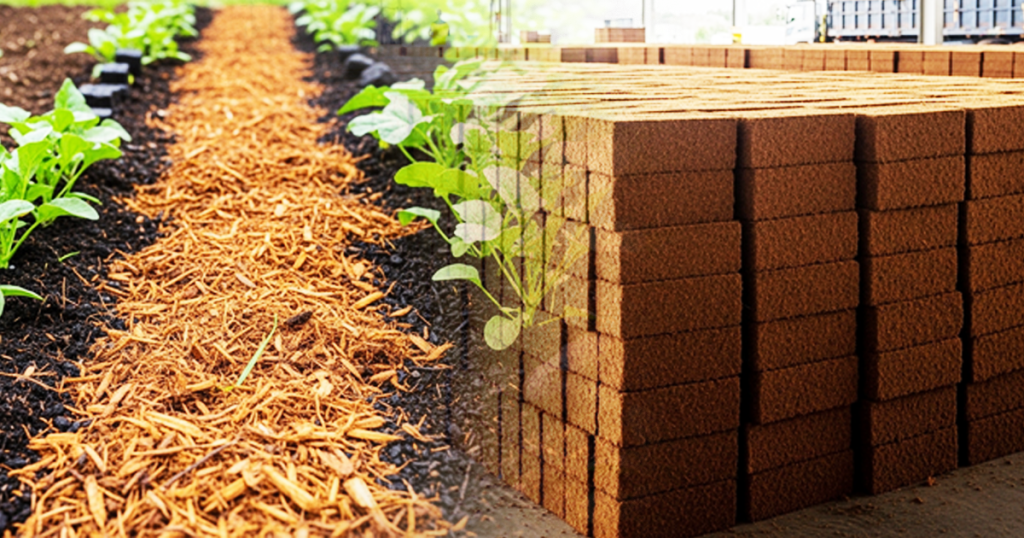
In agriculture, coir fiber is ground into cocopeat or coir pith, which serves as a popular growing medium. Its high water retention, porosity, and microbial resistance make it ideal for soil conditioning and hydroponics.
From a technical perspective, coir fiber’s variability in thickness and density allows for versatile applications across multiple domains.
Key Differences Between Coco Bristle and Coir Fiber
Structure and Texture
Coco bristle is stiff, thick, and unyielding, while coir fiber is more variable, ranging from coarse to soft. This physical distinction determines their respective uses.
Processing Method
Coco bristle generally undergoes a more labor-intensive retting and hand-extraction process. Coir fiber, on the other hand, can be mechanically processed and is more scalable in production.
Industrial Applications
Coco bristle is favored in products that need durability and rigidity. Coir fiber is more adaptable, used in agricultural, industrial, and domestic applications.
Market Demand and Usage
Globally, the demand for coir fiber outpaces coco bristle due to its wide utility in agriculture and construction. However, coco bristle remains indispensable for niche applications requiring high tensile strength.
Why It Matters: Impacts on Manufacturing and Research
From a manufacturing perspective, selecting the correct type of coconut fiber is critical. Using coco bristle in place of soft coir fiber could damage machinery or produce poor product results. Conversely, using coir where bristle is required might result in structural failure or reduced product life span.
As researchers, we must educate stakeholders on these material differences. Each fiber type plays a role in the global movement toward sustainable, biodegradable alternatives. Incorrect classification can lead to misrepresentation in data, affecting research outcomes and material innovation.
Moreover, regulatory bodies and exporters must ensure accurate labeling to prevent confusion in international trade, where these materials are commonly misinterpreted due to overlapping terminologies.