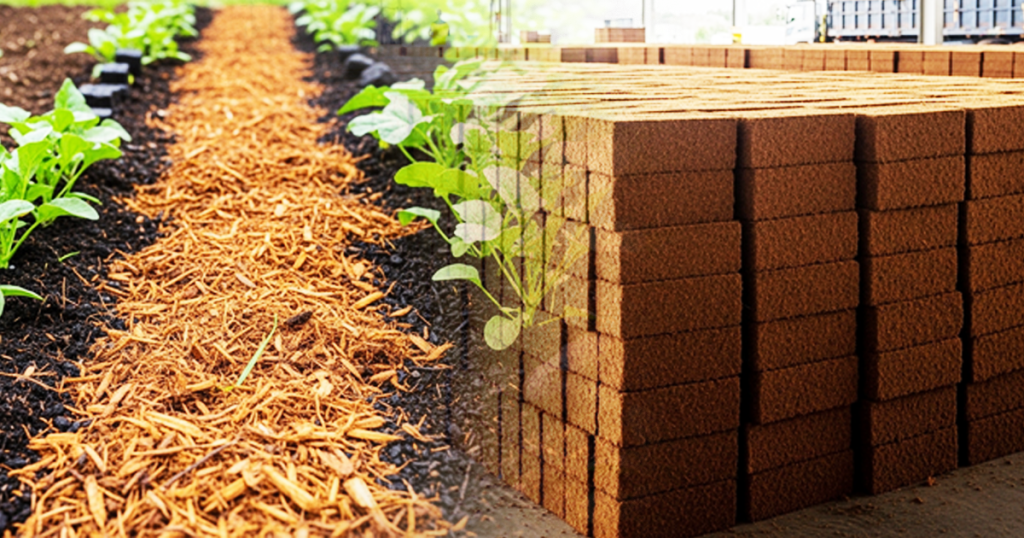
What Makes Cocopeat Powder Ideal for Agriculture?
As a researcher in agricultural technology and plant substrates, I have observed a rising trend: farmers across different regions and climates are using cocopeat powder to boost their yields. This natural, sustainable medium is no longer limited to hobbyists and gardeners commercial growers are now adopting it as a key part of their soil management and hydroponic systems.
In this article, I will break down how cocopeat powder is helping farmers increase productivity, improve soil health, and reduce resource dependency.
Cocopeat powder, or coir pith, is the ground-up residue from coconut husk processing. It is biodegradable, sterile, and rich in lignin a compound that encourages beneficial microbial activity in the soil.
Key Agricultural Advantages
- Water Retention: Holds up to 8 times its weight in water.
- Soil Structure Improvement: Enhances aeration and reduces compaction.
- Reusable and Cost-Effective: Can be reused for several planting cycles.
- Neutral to Slightly Acidic pH: Compatible with most crop types.
Yield Gains Observed in the Field
In field trials and collaborations with farming cooperatives, I’ve seen a consistent pattern: when cocopeat is integrated into the growing system, yields increase by 15–35%, depending on the crop and management practices.
Example 1: Greenhouse Tomatoes (Indonesia)
In Central Java, farmers added cocopeat to their hydroponic tomato systems and reported:
- 30% increase in fruit set
- Improved root mass
- Less nutrient leaching
Example 2: Chili Farming (India)
Chili growers in Tamil Nadu used a cocopeat-compost mix and noted:
- Faster flowering
- Better moisture control during dry spells
- Reduction in soilborne diseases
How Farmers Are Using Cocopeat
1. Soil Amendment
Farmers blend cocopeat with existing soil to improve texture and water dynamics. A typical mix is:
- 40% cocopeat
- 30% sandy loam
- 30% compost or manure
This mix is particularly effective in dry or clay-heavy regions.
2. Seedling Nurseries
Cocopeat is ideal for seedling trays, especially in large-scale vegetable farming. Its fine, soft texture helps with uniform germination and easy transplanting.
3. Soilless Cultivation and Hydroponics
Farmers transitioning to hydroponics use cocopeat in grow bags or NFT systems. It acts as a passive medium to hold roots while allowing nutrient solutions to flow through.
Economic and Environmental Benefits
Using cocopeat not only improves yields but also contributes to sustainable farming practices:
Reduced Water Usage
Its water-holding capacity allows for less frequent irrigation vital in drought-prone areas. Trials in arid zones show up to 50% water savings.
Lower Fertilizer Wastage
Because cocopeat retains nutrients near the root zone, farmers can apply less fertilizer with the same or better crop outcomes.
Reusability and Waste Management
Cocopeat can be reused for 3–4 planting cycles with proper treatment. This reduces long-term input costs and minimizes agricultural waste.
Challenges and Solutions
Despite its benefits, some farmers face issues with cocopeat, especially when using raw or low-grade material.
Challenge: High Salt Content
Solution: Use pre-washed and buffered cocopeat, or treat with calcium nitrate before planting.
Challenge: Initial Cost
Solution: Although cocopeat may cost more upfront than traditional soil, it pays off through higher yields, water efficiency, and reusability.
Final Thoughts
Farmers who integrate cocopeat powder into their systems are not just seeing better crops they’re building more resilient and sustainable farms. With rising global concerns over soil degradation and water scarcity, cocopeat offers a practical, eco-friendly solution that aligns with the future of farming.
As research continues, we expect cocopeat to become a standard component in progressive, data-driven agriculture.