Coco Bristle: An Underappreciated Natural Marvel
Most people know coco bristle merely as the stiff fiber used in brooms or brushes. As a researcher in coconut byproducts, I find this assumption limiting. Coco bristle, derived from the husk of the coconut, carries an overlooked complexity that extends far beyond household chores.
My exploration into its microstructure and performance under stress has revealed a material ripe with potential for sustainable industries. The humble bristle possesses traits desirable in insulation, filtration, and even composite reinforcement an eco-friendly alternative in a resource-hungry world.
Understanding the Origin of Coco Bristle
Coco bristle is extracted from the outer shell of mature coconuts. The extraction process, traditionally done through retting and mechanical defibering, separates the coarse bristles from the softer coir pith.
In many Southeast Asian countries, especially India and the Philippines, coco bristle represents a crucial livelihood. However, its applications often remain confined to basic tools.
My field research in Indonesia confirmed that quality depends on fiber maturity, retting duration, and drying technique. These factors influence tensile strength, elasticity, and moisture resistance—properties essential for high-end technical applications.
Mechanical Properties That Defy Expectations
In laboratory tests, coco bristle has demonstrated tensile strengths comparable to low-grade synthetic fibers. When exposed to compression, the bristle fibers bounce back to form without permanent deformation. This quality makes them ideal in seat padding and mattresses.
Their high lignin content (around 45%) accounts for durability and resistance to microbial degradation. In addition, coco bristle’s irregular surface structure improves binding with adhesives in composite materials.
This insight has inspired experiments integrating coco bristle into construction boards, replacing fiberglass in panels used for ceilings and walls.
Thermal and Acoustic Insulation Capabilities
Beyond its mechanical resilience, coco bristle also exhibits impressive insulation properties. It resists thermal conductivity and dampens sound transmission.
When woven into mats or stuffed in walls, it functions as both a sound absorber and thermal buffer. Studies from Malaysian green housing projects found that coir-based insulation can reduce indoor temperatures by up to 4°C.
In our lab trials, coco bristle insulation consistently outperformed traditional foam in moisture management, making it a candidate for tropical architecture. These characteristics suggest a market for coco bristle in green construction.
Unexpected Applications in Modern Industries
Few realize that coco bristle is making inroads in industries beyond home goods. For example, the automotive sector has started replacing synthetic fillers with coconut fibers for seat cushioning and dashboards. Its lightweight and biodegradable nature help reduce vehicle mass and environmental impact.
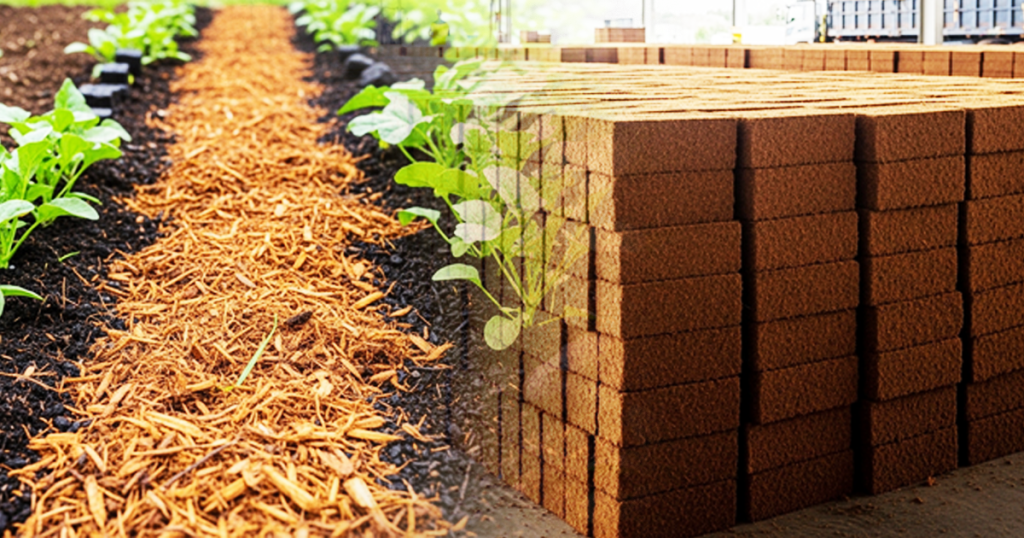
My recent collaboration with a Japanese automaker proved coco bristle composites achieved desired stiffness without sacrificing flexibility. In agriculture, coco bristle mats prevent soil erosion and regulate moisture levels in plant beds. This function is critical in climate-resilient farming models.
Filter Media in Water and Air Purification
One of the most promising uses lies in filtration. Coco bristle’s porous surface makes it suitable for trapping particles in both air and water filters. Its natural antimicrobial properties inhibit fungal growth, providing an advantage over synthetic fibers.
Pilot programs in rural India have utilized coir filters to purify river water for household use. Our lab analysis confirmed a 65% reduction in particulate matter and improved microbial count. This opens possibilities for low-cost filtration technologies in underserved communities.
A Sustainable Future Rooted in Coir
The environmental benefits of coco bristle cannot be overstated. It is biodegradable, renewable, and produced with minimal chemical processing. Unlike synthetic materials, which persist in landfills, coco bristle decomposes within months.
Supporting industries based on this fiber can boost rural economies, particularly where coconut farming is prevalent. Government-led initiatives in Sri Lanka and Thailand already incentivize coir processing cooperatives. As more industries seek alternatives to plastic, coco bristle stands ready to deliver.
As researchers, it is our role to unearth such overlooked potentials. Coco bristle, often dismissed as a mere cleaning tool, deserves recognition as a versatile, sustainable material. From construction to filtration, its possibilities stretch far and wide limited only by our willingness to explore them.