Cocopeat as a Sustainable Solution
As a researcher deeply involved in the study of cocopeat and its applications, I have observed a significant transformation in global agricultural preferences. The humble by-product of coconut husk cocopeat once considered agricultural waste.
Has now become a central player in sustainable farming practices across continents. But what’s really fueling this global surge in demand for cocopeat blocks?
A Renewable and Eco-Friendly Growing Medium
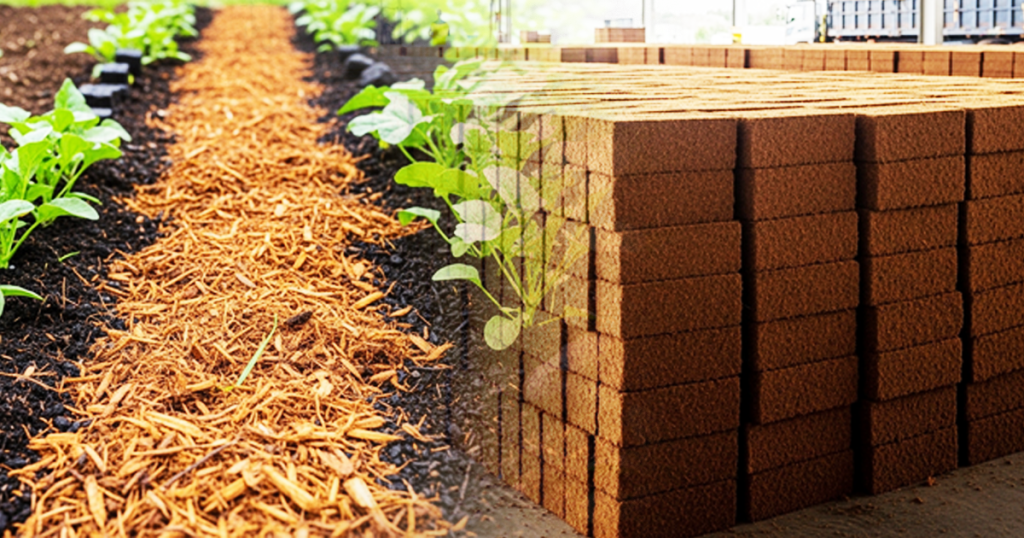
Cocopeat, also known as coir pith, is a spongy, fibrous material derived from the processing of coconut husks. Its increasing popularity is largely attributed to its status as a renewable, biodegradable, and environmentally sustainable alternative to traditional peat moss.
Unlike peat, which takes centuries to regenerate and is often harvested unsustainably, cocopeat is an annually renewable resource with minimal ecological footprint. Countries with coconut production like India, Sri Lanka, Indonesia, and the Philippines are experiencing a boom in export activity.
The shift is not only economic but also environmental. International regulations and green certifications have discouraged peat moss usage in horticulture, paving the way for eco-friendlier substrates like cocopeat.
Booming Horticulture and Hydroponics Sectors
The Growth of Soilless Farming Systems
Another key driver behind the demand surge is the rapid expansion of soilless farming systems such as hydroponics, aeroponics, and vertical farming. These methods depend heavily on stable, sterile, and high-moisture-retention media qualities that cocopeat offers in abundance.
In hydroponic applications, cocopeat blocks are compressed and easily rehydrated to provide a fluffy, oxygen-rich medium ideal for root development. Its natural resistance to pathogens and ability to retain water while allowing sufficient aeration make it a preferred choice for high-value crops like strawberries, tomatoes, and leafy greens.
Governments and private enterprises are investing in controlled-environment agriculture to meet urban food demands and reduce land usage. As a result, demand for reliable growing substrates has never been higher.
Shifts in Consumer Awareness and Organic Preferences
Demand for Chemical-Free Cultivation Practices
Consumer behavior is evolving. There is a rising preference for organic, chemical-free, and locally grown produce. Cocopeat supports this shift by offering a medium that requires fewer synthetic additives and enhances microbial life when used in organic farming systems.
Research has shown that cocopeat improves soil structure, supports beneficial microbes, and reduces nutrient leaching, especially when mixed with compost or biofertilizers. Its role in sustainable soil management is now widely recognized.
Particularly in European and North American markets that demand traceable, environmentally friendly food production processes.
Export Markets and Economic Potential
Southeast Asia’s Role as a Global Supplier
The surge in global demand has positioned Southeast Asia as a powerhouse in cocopeat production. In 2024 alone, India reported a 30% increase in cocopeat exports compared to the previous year. Sri Lanka and Indonesia are also scaling up production capacities to meet export orders from Europe, the Middle East, and North America.
However, the increase in demand also comes with challenges. Quality consistency, transportation logistics, and compliance with phytosanitary regulations remain crucial issues for exporters. These factors are now the focus of collaborative research between agricultural scientists and industry stakeholders.
Technological Innovation and Research
Enhancing Quality Through Science
Modern research is also contributing to cocopeat’s popularity. Treatments such as buffering (to remove excess potassium and sodium) and precision washing techniques have significantly improved the substrate’s consistency and suitability for different plant types.
In my own research, we’ve been testing various particle size distributions and compression techniques to optimize water retention and air porosity in cocopeat blocks. These innovations ensure better plant health and yield, directly impacting profitability for growers.
Universities and agricultural institutions are beginning to invest in long-term studies around cocopeat’s role in regenerative farming systems. This scientific backing is increasing buyer confidence and stimulating further growth in demand.
Cocopeat’s Bright Future
The global surge in demand for cocopeat blocks is not a passing trend. It reflects a fundamental shift toward sustainable, innovative, and efficient agricultural practices. As urban farming scales up, climate change challenges intensify, and consumer preferences evolve, cocopeat will likely remain at the forefront of horticultural media.
For researchers, producers, and farmers alike, this opens exciting opportunities both to contribute to sustainable development and to shape the future of global food security.