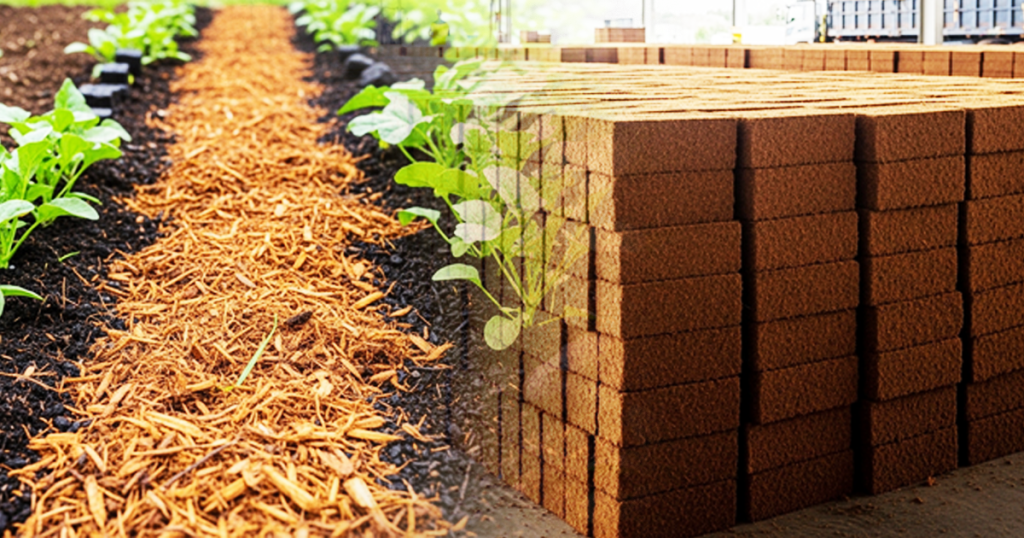
Understanding Cocopeat’s Role in Cultivation
As a cocopeat researcher with years of field and lab experience, I’ve witnessed how this versatile medium can dramatically improve plant health nwhen used correctly. However, despite its benefits, improper use of cocopeat powder often leads to disappointing results.
In this article, I’ll highlight the top five mistakes growers make with cocopeat and how to avoid them for optimal crop success.
Cocopeat, also known as coir pith, is the finely ground by-product of coconut husk processing. With its high water retention, air porosity, and biodegradability, it has become a favored component in organic farming, potting mixes, and hydroponics. But success with cocopeat isn’t just about using it it’s about using it right.
Mistake 1: Skipping the Washing and Buffering Process
Why It Matters
Raw cocopeat often contains high levels of sodium and potassium, which can interfere with nutrient uptake, particularly calcium and magnesium.
The Research Perspective
Our lab analyses have consistently found EC (electrical conductivity) levels above 2.0 in unwashed cocopeat well above the safe range for seedlings.
The Fix
Always wash cocopeat thoroughly to remove fine dust. For buffering, soak it in a calcium nitrate solution (1–2 g/L) for 12 hours, then rinse with clean water. This neutralizes excess salts and prepares the medium for healthy root development.
Mistake 2: Using Cocopeat as a Standalone Medium
Why It’s a Problem
While cocopeat has excellent water-holding capacity, it lacks essential nutrients and can compact over time if used alone.
The Fix
Mix cocopeat with compost, perlite, or vermiculite in appropriate ratios. A commonly used blend is:
- 40% cocopeat
- 30% compost
- 30% perlite
This enhances both nutrient content and aeration, preventing root suffocation.
Mistake 3: Overwatering
Common Misconception
Because cocopeat feels dry on the surface, many growers assume it needs more water.
Research Insight
Our trials showed that the inner layers of cocopeat remain moist long after the surface appears dry, increasing the risk of root rot if overwatered.
The Fix
Stick to a watering schedule based on plant needs, not surface dryness. Use a moisture meter or perform a squeeze test to check internal moisture levels before irrigating.
Mistake 4: Ignoring pH and EC Monitoring
Why It Matters
Cocopeat’s natural pH is slightly acidic (5.5–6.5), which is generally favorable. However, its pH and EC can shift with repeated use, especially if nutrients aren’t balanced.
The Fix
Test the pH and EC of your cocopeat regularly, especially if reusing it. Maintain pH between 5.8–6.2 and EC below 1.5 for most crops. Adjust using lime or acid solutions as necessary.
Mistake 5: Improper Storage
Risk Factors
Improperly stored cocopeat can harbor mold, bacteria, or insects, especially in humid climates.
The Fix
Store cocopeat in a dry, ventilated area, off the ground and away from direct sunlight. Use sealed containers or breathable bags to maintain hygiene and prevent contamination.
Final Thoughts
Cocopeat is a powerful medium, but like any agricultural input, its potential depends on informed handling. By avoiding these common mistakes improper washing, overwatering, poor mixing, and lack of monitoring you can fully unlock the benefits cocopeat has to offer.
Used correctly, cocopeat will reward you with healthier roots, stronger plants, and better yields across a variety of crops and conditions.