Cocopeat: A Silent Revolution in Modern Agriculture
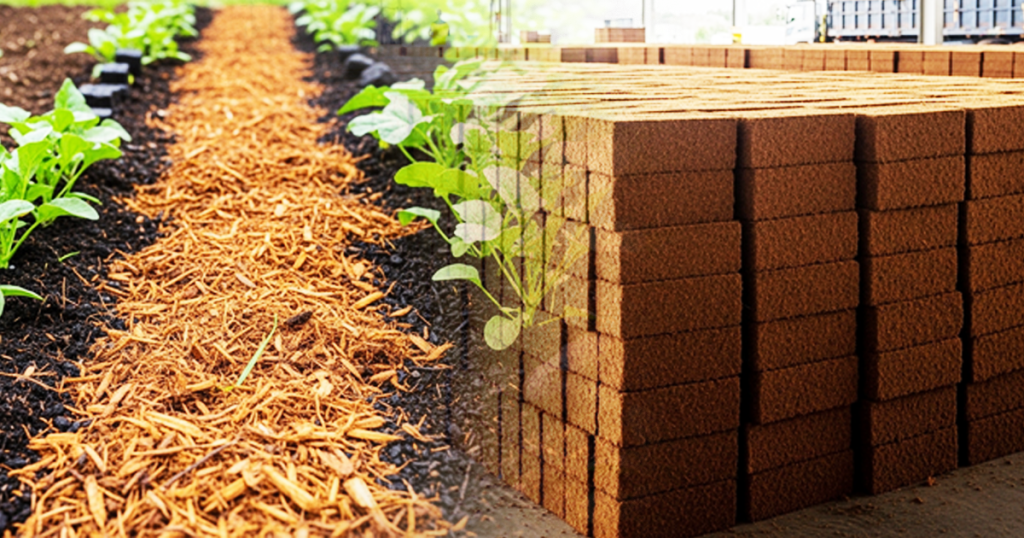
As a researcher in the field of sustainable agriculture, I’ve observed a quiet yet powerful shift in farming practices none that involves the widespread adoption of cocopeat blocks. Derived from the fibrous husk of coconuts, cocopeat is increasingly replacing conventional soil and peat moss in greenhouses, nurseries, and even open fields.
Cocopeat blocks are not just a growing medium they’re an agricultural revolution packed into a compressed form. Their ability to retain water, improve aeration, and support plant health is reshaping the way we approach soil management and crop cultivation.
The Sustainability Crisis Behind Traditional Growing Mediums
Peat moss, once the gold standard for soil improvement, is now under scrutiny due to its environmental impact. Extracting peat contributes significantly to carbon emissions and disrupts fragile wetland ecosystems. Farmers and agronomists are actively seeking alternatives that do not compromise ecological integrity.
This is where cocopeat enters the picture. Produced from coconut waste, cocopeat is renewable, biodegradable, and abundant in coconut-producing countries. By using cocopeat blocks, farmers not only reduce their carbon footprint but also contribute to waste reduction in the coconut processing industry.
Benefits That Farmers Can’t Ignore
High Water Retention and Aeration
One of the most compelling reasons farmers are switching to cocopeat blocks is their superior water retention. These blocks can hold up to eight times their weight in water, ensuring consistent moisture levels for crops, especially in arid regions.
Additionally, cocopeat’s loose structure enhances aeration, preventing root rot and encouraging healthy plant growth. This is particularly crucial in hydroponic systems, where oxygen access directly affects plant vitality.
pH Stability and Nutrient Holding Capacity
Cocopeat has a near-neutral pH, typically ranging from 5.5 to 6.5. This makes it compatible with a wide variety of crops without the need for significant pH adjustment. Moreover, its high cation-exchange capacity (CEC) allows it to retain nutrients and release them gradually, improving fertilizer efficiency.
These factors are vital for precision farming, where input efficiency and crop performance are tightly monitored.
Economic and Logistical Advantages
Compressed cocopeat blocks are easy to store and transport. A single 5-kg block can expand up to 75 liters when hydrated, drastically reducing shipping costs compared to traditional soil or compost. For farmers operating on tight margins, this translates to better resource allocation and lower overheads.
Furthermore, many suppliers now offer pre-buffered cocopeat, reducing the need for on-site processing and enabling immediate use. This convenience is encouraging even small-scale farmers to adopt cocopeat in their daily operations.
Field Applications and Global Adoption Trends
Across Asia, Europe, and parts of Africa, farmers are integrating cocopeat into crop production systems ranging from vegetables and flowers to high-value herbs. In India and Sri Lanka, for instance, cocopeat has become a cornerstone of greenhouse horticulture. In the Netherlands, it’s frequently mixed with perlite or vermiculite for advanced substrate systems.
Research trials I’ve conducted in tropical climates demonstrate that plants grown in cocopeat exhibit faster germination, stronger root development, and higher yields. These results are not anecdotal; they’re data-backed and reproducible across different climates and crop types.
Challenges and Considerations
Despite its many benefits, cocopeat isn’t without its challenges. Unwashed cocopeat may contain high levels of salts, particularly potassium and sodium, which can affect sensitive crops. Thus, proper washing and buffering are critical before use.
Additionally, quality control varies among producers. As demand increases, it’s essential for farmers to source cocopeat from reliable suppliers with transparent processing methods.
The Future of Farming Lies in Innovation
In the context of climate change and the urgent need for sustainable practices, cocopeat blocks are more than a trend they are a necessity. They align with the global movement toward eco-conscious farming and provide real, tangible benefits to growers.
As a researcher, I continue to explore ways to enhance cocopeat’s functionality through bio-inoculants and nutrient integration. But even in its current form, cocopeat represents a monumental step forward in sustainable agriculture.
The message is clear: farmers aren’t just switching to cocopeat because it works they’re doing it because it’s the future.