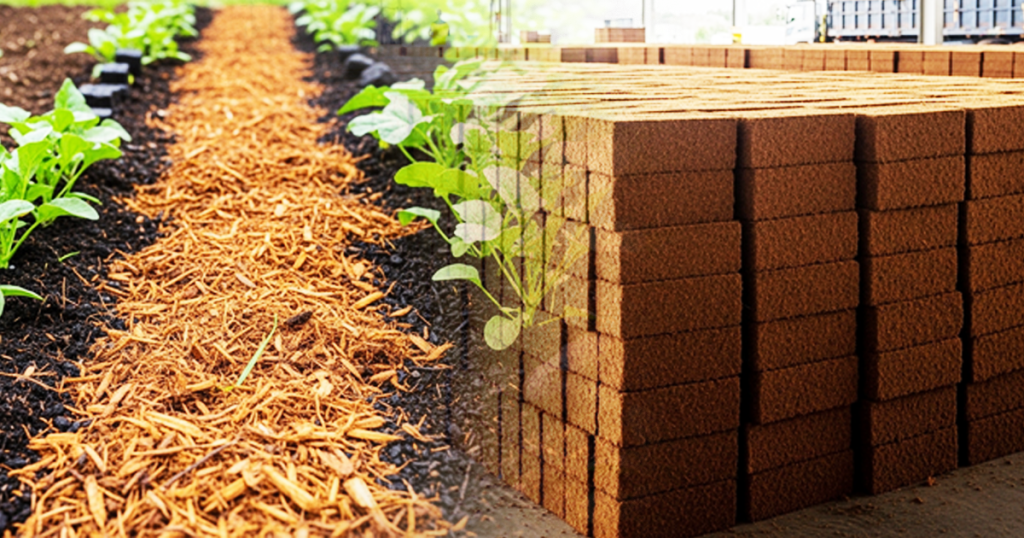
A Closer Look at Cocopeat’s Scientific and Agricultural Value
As a researcher specialized in sustainable growing media, I’ve studied various organic substrates over the years. Among them, cocopeat powder stands out for its balance of agronomic effectiveness and environmental sustainability.
Derived from coconut husks, cocopeat also called coir pith or coir dust is gaining widespread use in both conventional and organic farming systems.
Cocopeat is primarily valued for its texture, moisture-holding ability, and compatibility with multiple plant species. In laboratory trials and commercial farm experiments, I’ve observed its impressive performance in promoting root development, conserving water, and reducing nutrient leaching.
But the real strength of cocopeat lies in its versatility it serves growers ranging from backyard gardeners to large-scale hydroponic farms.
Core Benefits of Cocopeat Powder
Superior Water Management
Cocopeat can retain up to eight times its weight in water. This makes it invaluable in water-scarce regions where efficient irrigation is critical. My greenhouse studies revealed that plants grown in cocopeat needed up to 50% less irrigation compared to traditional soil beds. Its sponge-like structure holds water while allowing excess moisture to drain away, thus preventing root rot.
Enhanced Root Aeration
Root health is often overlooked in soil-based cultivation, especially in compacted or clay-heavy soils. Cocopeat, by contrast, remains porous and allows air to circulate around the root zone. This oxygen access promotes microbial activity and accelerates nutrient uptake, which is vital for early-stage plant growth.
Neutral pH and High CEC
Cocopeat generally has a pH between 5.5 and 6.8, ideal for most crops. It also features a high cation exchange capacity (CEC), allowing it to store and gradually release nutrients. This makes fertilizer use more efficient while reducing runoff an important environmental consideration.
Practical Applications in Agriculture and Horticulture
Seedlings and Nursery Use
Cocopeat is widely used in nurseries and propagation centers. Its fine texture supports delicate seedlings, encouraging uniform germination. In propagation trials I conducted with cucumbers and tomatoes, seedlings in cocopeat had faster emergence rates and stronger root development than those grown in soil.
Hydroponics and Soilless Systems
In hydroponic systems, cocopeat often replaces rock wool and other synthetic media. It acts as a stable substrate that supports plants without altering nutrient solution chemistry. When combined with perlite or vermiculite, it forms an ideal matrix for leafy vegetables and fruiting crops.
Blending and Custom Mixes
Cocopeat is also used as a blend with other materials such as compost, sand, or vermicompost. This customization allows growers to adjust water retention and nutrient profiles based on crop needs and climatic conditions. These blends have shown promising results in container farming and rooftop gardens.
Challenges and Areas for Improvement
Salt Content and Buffering
Raw cocopeat often contains high levels of sodium and potassium. These salts must be removed through washing and buffering before agricultural use. Farmers unfamiliar with this process may encounter poor germination or nutrient lockout. As a solution, I advocate for improved education on cocopeat preparation and stricter industry quality standards.
Supply Chain and Processing
The quality of cocopeat varies depending on the source and processing method. Drying conditions, compression ratios, and packaging all affect usability. Developing standardized processing methods and certification systems can help ensure consistent product quality across international markets.
Future Potential in Green Agriculture
Climate Change Mitigation and Circular Farming
Cocopeat plays a role in climate-smart agriculture. As a renewable byproduct, it reduces waste from coconut industries while offering a sustainable alternative to peat moss, which depletes natural bogs. By using cocopeat, farmers contribute to circular farming systems that emphasize regeneration over extraction.
Innovations in Cocopeat Applications
Ongoing research is exploring cocopeat’s potential in bioremediation, carbon sequestration, and even aquaponics. My team is developing advanced formulations that combine cocopeat with biochar and mycorrhizal fungi to enhance soil resilience. These innovations may soon redefine how we view and use organic substrates.
A Substrate for the Future
Cocopeat powder is no longer a niche product it’s an integral part of sustainable agriculture’s future. With the right processing and education, its applications will only expand. For researchers, growers, and policymakers alike, cocopeat offers a rare synergy: agronomic performance, economic value, and ecological integrity.