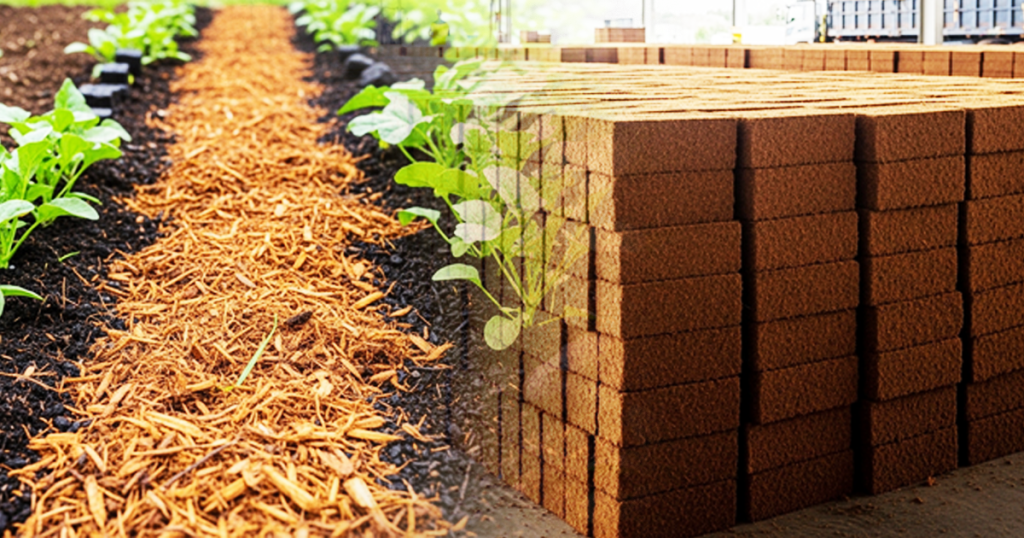
Exploring the Untapped Potential of Coconut Fiber in Sustainable Design
As green building technologies continue to evolve, natural fibers are reentering the spotlight. Coco bristle an often-overlooked byproduct of the coconut industry is beginning to catch attention.
Its resilience, biodegradability, and insulating properties raise a pressing question: can this fibrous material be a credible candidate in sustainable construction?
As a researcher in the field of cocopeat and plant-based materials, I’ve long been fascinated by underutilized organic fibers.
While coco peat has received substantial recognition in horticulture, coco bristle extracted from the outer husk of coconuts remains relatively untapped in architecture. This article explores its material potential, current applications, and feasibility in the context of green design and eco-friendly building materials.
Understanding Coco Bristle: Structure and Composition
Coco bristle, also known as coir fiber, is extracted from the mesocarp of coconut shells. It is highly lignified, lending it excellent tensile strength and resistance to saltwater degradation. With a density ranging between 1.15 to 1.30 g/cm³ and a lignin content of over 40%, coco bristle exhibits structural traits akin to low-grade synthetic polymers.
When treated and compacted, coco bristle can form rigid panels or be integrated into biocomposites. It is also flame-resistant, biodegradable, and demonstrates low thermal conductivity.
These characteristics present an opportunity to leverage this fiber in walls, insulation panels, acoustic boards, or even prefabricated lightweight structural components.
Applications in Green Architecture
Insulation and Acoustic Panels
Thermal and sound insulation are two critical pillars of green architecture. Coco bristle’s low thermal conductivity (approximately 0.045 W/m·K) makes it an ideal candidate for natural insulation panels. Unlike synthetic foams, coco bristle is non-toxic, breathable, and free from VOC emissions.
In controlled tests, pressed coco bristle panels matched or outperformed traditional mineral wool in terms of sound absorption, particularly at mid-range frequencies. These properties make it suitable for wall partitions in both residential and commercial structures focused on eco-conscious living.
Composite Reinforcement Material
Recent developments in bio-based composites have seen the integration of coco bristle with polymer matrices such as epoxy or polylactic acid (PLA). This hybrid approach creates fiber-reinforced panels with higher mechanical strength and reduced environmental impact.
In field trials, these composites have shown promising durability under tropical climate stress tests, a relevant point for construction in Southeast Asia and coastal regions.
Limitations and Challenges
Despite its many advantages, coco bristle is not without limitations. Its natural variability in length and thickness affects uniformity in industrial production. Pre-treatment processes like alkaline soaking or steam explosion are necessary to enhance its bonding with composite materials. These treatments increase costs and complicate scalability.
Moreover, regulatory standards for biocomposites are still in early development stages. Most building codes currently do not recognize coco bristle panels for load-bearing applications. Without clear certification protocols, its adoption in mainstream construction may be slow.
Sustainability and Lifecycle Benefits
Coco bristle’s environmental footprint is minimal. As a waste byproduct, it requires no additional cultivation resources. It is renewable, compostable, and carbon-negative when compared to synthetic insulation.
Furthermore, coconut-growing nations such as Indonesia, India, and the Philippines produce over 60 million tons of husk annually an ample, largely untapped supply chain.
Lifecycle analysis reveals that coco bristle panels generate less than one-tenth of the CO₂ emissions compared to conventional fiberglass insulation. When integrated into passive design strategies, coco bristle can contribute meaningfully to reducing operational energy demands.
Future Potential and Research Outlook
Our lab is currently running tests on hybrid wall systems using coco bristle and lime-based plasters. Preliminary results suggest that these walls can regulate indoor humidity while maintaining structural integrity under seismic loading.
Further research is needed to standardize fiber treatment protocols, scale manufacturing processes, and assess long-term aging behavior. But the early signs are clear: coco bristle is not just farm waste it’s an emerging green technology.
With more cross-disciplinary collaboration among material scientists, architects, and regulatory bodies, coco bristle could soon graduate from the margins of agricultural residue to the core of green building innovation.