A Sustainable Future Rooted in Coconut Waste
In the heart of tropical agriculture, a quiet revolution is taking place. As a researcher deeply involved in studying cocopeat and coconut coir applications, I have seen firsthand how what was once considered agricultural waste is becoming a linchpin in the global sustainability movement. The coconut fiber movement is not just a trend it is a growing solution in the fight against climate change, soil degradation, and plastic pollution.
Coconut husk, which makes up nearly 35% of the entire coconut fruit, was traditionally discarded or burned, contributing to environmental degradation. Today, through innovative processing and refined applications, coconut coir (fiber) and cocopeat (dust or pith) are being transformed into biodegradable, renewable, and highly effective alternatives in industries from agriculture to packaging.
The Science Behind Coconut Fiber Utilization
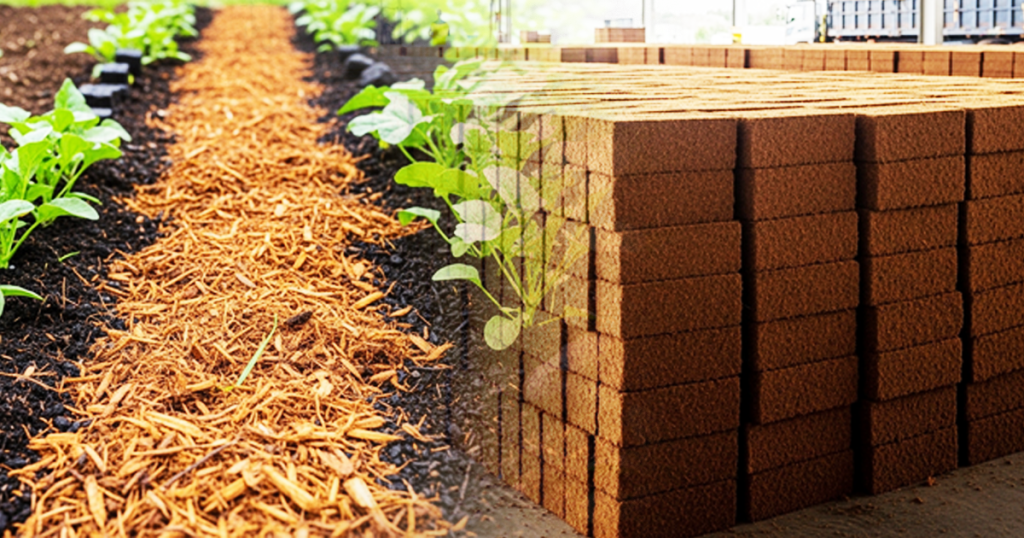
Cocopeat, a byproduct derived from processing coconut husks, has proven to be an excellent soil amendment. Rich in lignin and cellulose, it offers superior water retention, aeration, and microbial activity in soil, making it ideal for horticulture and hydroponic systems. Unlike peat moss, cocopeat is renewable and doesn’t require the mining of ancient peat bogs hence its increasing popularity among environmentally conscious growers.
From my lab analysis, cocopeat has a neutral pH and high cation exchange capacity, allowing it to hold nutrients longer, reducing the need for chemical fertilizers. Moreover, its structure encourages strong root development, which can increase crop yields by up to 30% in some controlled studies.
On the industrial side, long coir fibers are now replacing synthetic fibers in items like floor mats, brushes, mattresses, and even in construction as erosion control blankets. Their strength and elasticity make them ideal for applications demanding durability and biodegradability.
From Waste to Wealth: A Circular Economy Model
This movement exemplifies a successful circular economy. Coconut-processing regions such as India, Indonesia, the Philippines, and Sri Lanka are now investing in coir mills and export facilities, turning what was once an environmental burden into an economic resource.
Smallholder farmers, previously constrained by the limited market value of coconut byproducts, now have access to additional income streams. In Indonesia alone, the coconut coir export value has doubled in the last five years, according to government trade data.
This isn’t just economic good news it’s environmental gold. By reducing organic waste sent to landfills, the carbon footprint of coconut production is significantly lowered. Moreover, the reduction of synthetic products (like plastic grow bags and geotextiles) through coir replacements helps curb non-biodegradable pollution.
Challenges in the Path Forward
Despite these promising developments, challenges remain. One of the major hurdles is standardization. The quality of cocopeat and coir products varies significantly depending on processing methods. As a researcher, I advocate for the implementation of international quality standards, particularly regarding EC (electrical conductivity), fiber length, and moisture content, which are crucial for agricultural performance.
Furthermore, awareness among farmers and manufacturers about the full potential of coconut coir remains limited. Training, research dissemination, and government support will be vital in ensuring this movement scales sustainably.
Global Demand Meets Local Innovation
The coconut fiber movement is not only a solution to waste management but also a testament to the power of indigenous innovation meeting global demand. From urban rooftop gardens in New York to large-scale greenhouse farms in the Netherlands, cocopeat and coir products are becoming staples.
Green startups are also harnessing coconut fiber in surprising ways. Biodegradable pots, compostable packaging, and even coir-based acoustic panels are emerging in eco-conscious markets. This shift is not just about replacing materials it’s about redesigning systems.
As a scientist and observer of this evolving landscape, I am optimistic. The coconut fiber movement illustrates how resourcefulness, sustainability, and innovation can converge to produce high-impact outcomes from low-value waste.