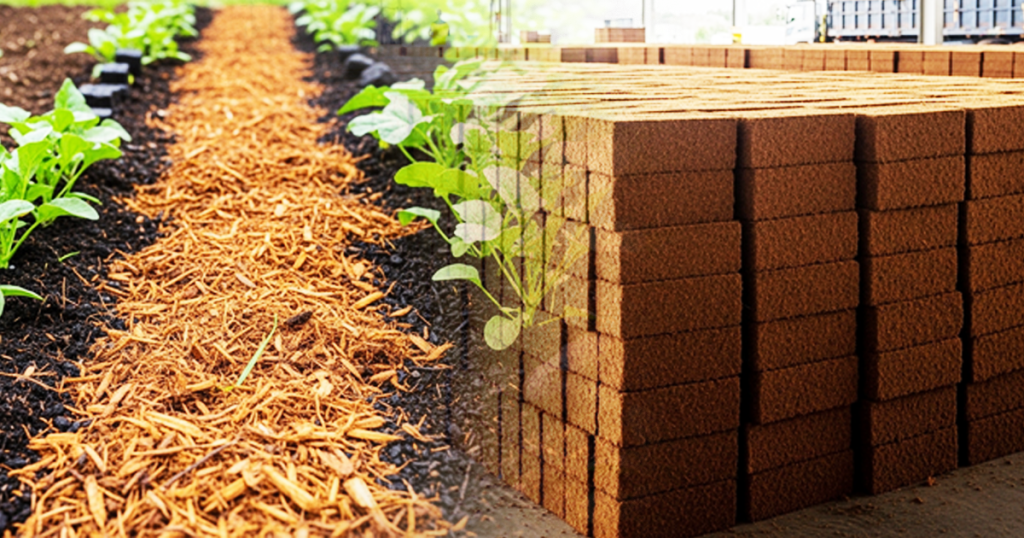
A Growing Global Shift to Organic Substrates
As a cocopeat researcher, I’ve witnessed a quiet but powerful shift in global agriculture. Eco-farmers across continents are embracing cocopeat powder not as a trend, but as a practical solution to mounting environmental and productivity challenges.
This naturally occurring, renewable substrate is emerging as a cornerstone of regenerative and climate-resilient farming systems. Cocopeat, the dusty byproduct of coconut husk processing, was once discarded as waste.
Today, it is repurposed as a sustainable soil alternative with immense value. In regions facing drought, soil degradation, and over-fertilization, eco-farmers have adopted cocopeat to rejuvenate soil health and enhance plant productivity.
Its growth is not limited to large-scale operations it’s being used in everything from community farms to permaculture systems.
Why Eco-Farmers Trust Cocopeat
Climate Resilience and Resource Efficiency
Cocopeat’s water-retention capability is one of its most celebrated features. In my fieldwork across Southeast Asia and sub-Saharan Africa, farmers using cocopeat reported up to 40% reductions in irrigation needs. This allows agriculture to continue even in areas hit by erratic rainfall or prolonged dry seasons.
Furthermore, cocopeat’s ability to maintain a stable root environment gives crops resilience during temperature fluctuations. Its fibrous structure insulates roots while preventing excess water retention a crucial balance for crops sensitive to moisture stress.
Organic Compatibility and Soil Regeneration
Cocopeat is free from pathogens, weeds, and synthetic additives. This makes it ideal for organic farming systems where soil purity is paramount.
I’ve collaborated with farms transitioning from chemical-intensive monocultures to regenerative practices, and cocopeat consistently proved to be an effective transitional medium.
Its high cation exchange capacity (CEC) helps retain essential nutrients, reducing leaching. Over time, as cocopeat decomposes, it contributes organic matter to the soil restoring structure, improving fertility, and fostering microbial life.
These regenerative qualities are what draw eco-farmers to adopt it as a long-term solution.
Global Adoption and Market Growth
From Local Innovation to Global Adoption
Countries such as India, Sri Lanka, Indonesia, and the Philippines are leading exporters of cocopeat. Meanwhile, import demand is surging in the U.S., Europe, and the Middle East. In my discussions with agricultural suppliers, demand has grown not just among commercial growers, but also among smallholder cooperatives, NGOs, and environmental organizations.
The market for cocopeat aligns with broader trends in sustainable agriculture and carbon-conscious farming. Industry forecasts suggest the global cocopeat market could surpass $3 billion by 2032. This growth is backed by increased investment in sustainable farming inputs and the rise of urban and vertical farming.
Addressing Challenges in Quality and Access
Despite its promise, challenges remain. Inconsistencies in processing, particularly in salt removal, have led to variable results in the field. I’ve advocated for standardized washing protocols and better quality labeling, especially for export-grade cocopeat.
In Africa and Latin America, access to cocopeat is still limited by shipping costs and distribution infrastructure. Initiatives that encourage local processing and knowledge-sharing among farmer networks are beginning to bridge this gap.
The Future of Cocopeat in Eco-Farming
Policy Support and Research Frontiers
Governments and agricultural extension programs are slowly recognizing the value of substrates like cocopeat. In several countries, cocopeat is now included in sustainable farming subsidies. From a research perspective, my team is exploring blends of cocopeat with compost, rice husk, and biochar to develop location-specific growing media tailored to different agroecological zones.
A Model for Circular Agriculture
Cocopeat exemplifies the principles of circular agriculture: waste-to-resource transformation, ecological efficiency, and soil regeneration. Its popularity among eco-farmers