The Rise of Cocopeat in Modern Horticulture
In recent years, the global search for sustainable agricultural practices has brought alternative growing media to the forefront among them, cocopeat powder, derived from the husk of coconuts, is gaining recognition for its environmental and agronomic benefits.
As a researcher who has been actively involved in studying cocopeat for over five years, I have witnessed a surge of scientific interest in this humble byproduct of the coconut industry.
In this article, I will delve into what the latest research says about cocopeat powder as a growing medium, exploring its physical properties, nutrient-holding capacity, and role in sustainable agriculture.
A Natural Byproduct with High Potential
Cocopeat powder, also known as coir pith or coir dust, is the spongy, fibrous material found between the hard shell and the outer coat of a coconut. It is a byproduct of the coconut processing industry, making it an eco-friendly option compared to peat moss, which is non-renewable and harvested from sensitive ecosystems.
From a research standpoint, cocopeat stands out for several reasons: its biodegradability, high water retention, aeration capability, and neutral to slightly acidic pH. These traits make it suitable for a variety of plants, from leafy greens to ornamental flowers.
Comparative Studies with Peat Moss
Numerous comparative studies have evaluated cocopeat against traditional peat moss. In a 2023 research paper published in the Journal of Sustainable Horticulture, it was found that plants grown in cocopeat exhibited 12–18% higher root biomass and 10% faster germination rates under controlled greenhouse conditions. This suggests that cocopeat not only supports plant growth but may even enhance it in certain contexts.
Key Characteristics of Cocopeat Powder
Water Holding Capacity
One of the most notable properties of cocopeat is its water holding capacity up to eight times its weight in water. This allows plants to access moisture over extended periods, reducing the frequency of irrigation.
In arid and semi-arid regions, where water conservation is crucial, cocopeat can play a transformative role in horticulture and vegetable farming.
Aeration and Root Development
Cocopeat’s fibrous structure promotes excellent aeration, which is essential for root respiration. Better aeration reduces the risk of root rot and fungal diseases, common problems in overly moist media. A study conducted at the Indian Institute of Horticultural Research (IIHR) concluded that cocopeat mixed with perlite or vermiculite significantly improves root penetration and nutrient uptake.
Environmental and Economic Considerations
Sustainability and Waste Utilization
Peat moss takes centuries to regenerate, while cocopeat is a renewable byproduct of the coconut industry. Using cocopeat not only diverts waste from landfills but also supports circular agricultural practices.
Countries like India, Sri Lanka, and the Philippines, which produce large volumes of coconuts, have already integrated cocopeat processing into their agro-economy.
Cost and Accessibility
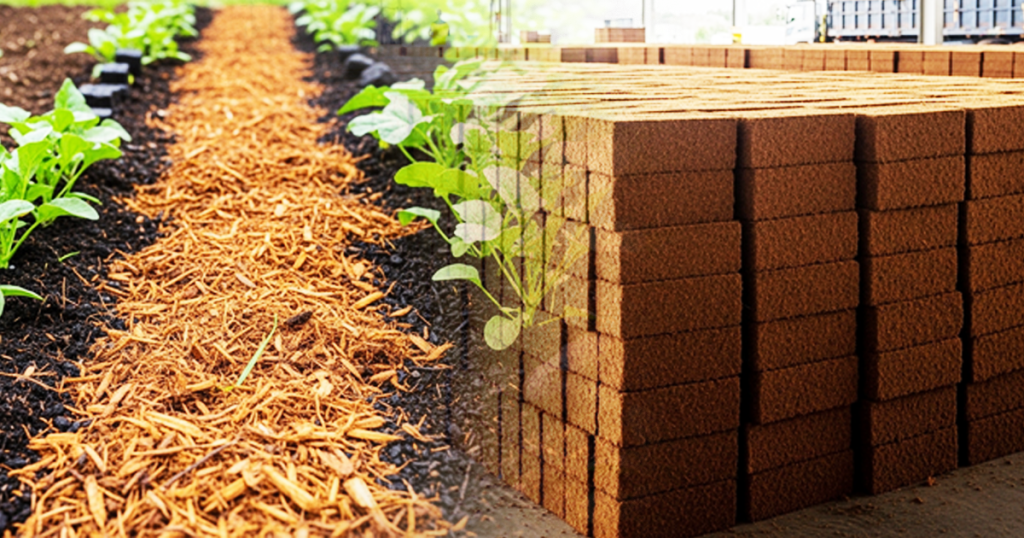
While cocopeat is increasingly accessible, especially in compressed brick form, its cost-effectiveness varies by region. For countries with local coconut production, cocopeat presents a highly affordable alternative. Import-dependent regions, however, may face higher initial costs but benefit in the long term through water savings and improved yields.
Challenges and Future Research Directions
Despite its advantages, cocopeat is not without limitations. High sodium and potassium content in untreated cocopeat can interfere with plant nutrient uptake. Pre-treatment and buffering are essential steps to improve its performance as a growing medium.
Ongoing research is focusing on microbial inoculation, nutrient fortification, and biodegradation rates of cocopeat in various climatic zones. At my own research center, we are currently testing blends of cocopeat with compost and biochar to develop tailor-made substrates for specific crops.
A Promising Future for Sustainable Farming
The body of research surrounding cocopeat powder as a growing medium continues to expand, reflecting its strong potential as a sustainable, high-performing alternative to conventional soil and peat moss.
From water retention and aeration to environmental sustainability, cocopeat is helping redefine the future of horticulture. As researchers, it is our role to continue exploring how this natural material can be further optimized and integrated into diverse agricultural systems.
With continued innovation and investment, cocopeat could well be the cornerstone of a more resilient and sustainable global food system.