From Agricultural Residue to Commercial Commodity
As a researcher specializing in sustainable agricultural materials, I have closely observed the rising global interest in cocopeat also known as coir pith or coir dust. Cocopeat is a spongy, fibrous by-product of coconut husk processing, often discarded as agricultural waste.
However, this so-called “waste” has now evolved into a highly valuable material, primarily in horticulture and hydroponics. The transformation of coconut waste into cocopeat blocks not only presents environmental benefits but also creates significant economic opportunities for rural and coastal communities.
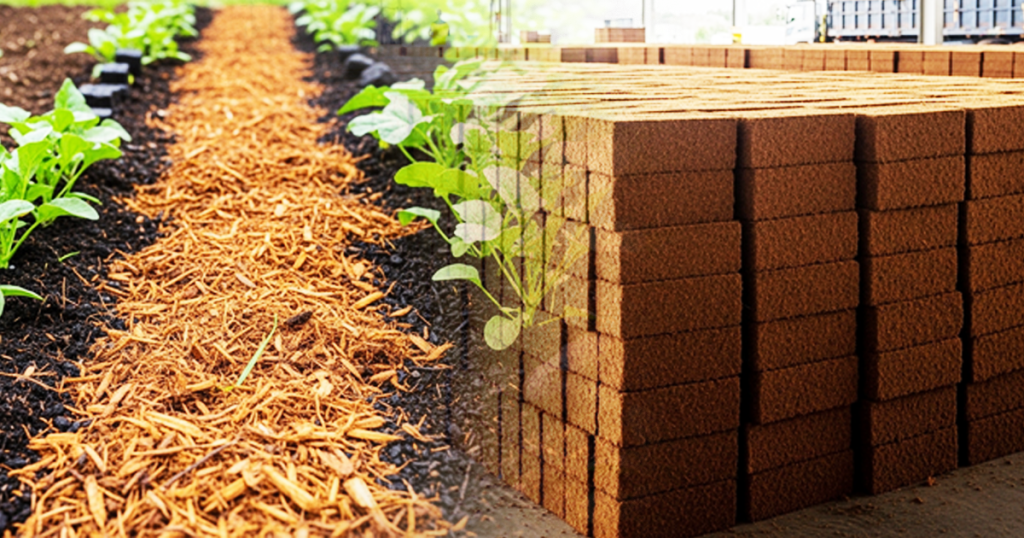
This shift has especially impacted tropical countries like Indonesia, India, Sri Lanka, and the Philippines, where coconut farming is abundant. Instead of burning or dumping the fibrous residue, farmers and small enterprises now process it into compact, export-ready cocopeat blocks.
These are used extensively as a soil substitute or amendment due to their excellent water retention, aeration, and biodegradability. What was once an environmental liability has become a revenue-generating asset.
The Economic Engine Behind Cocopeat Blocks
The economic ripple effect generated by cocopeat production is substantial. According to recent field studies and export data, the demand for cocopeat blocks has surged due to increased awareness of sustainable agriculture and organic farming practices.
The global hydroponics market, expected to reach over USD 22 billion by 2028, relies heavily on cocopeat as a growing medium. For producers, the conversion process involves several steps: drying, sieving, washing to reduce EC (Electrical Conductivity), compressing, and packaging.
These activities, often conducted in cottage industries or small-scale factories, generate employment for local workers particularly women. Moreover, the industry encourages the development of ancillary services such as logistics, quality testing labs, and export compliance consulting.
In India, for instance, small cooperatives have seen a rise in monthly income by 30–40% after investing in simple cocopeat block-making machinery. Similar success stories have emerged in Indonesia, where entrepreneurs transform husk waste into export-grade blocks sold to Europe, Japan, and the Middle East.
Environmental Sustainability Drives Market Growth
Cocopeat’s economic value is closely tied to its environmental benefits. Unlike peat moss, which is mined from carbon-rich wetlands, cocopeat is renewable and eco-friendly. Utilizing coconut husk residue not only minimizes waste but also reduces the carbon footprint of agricultural practices.
This aligns with global climate action goals and ESG (Environmental, Social, and Governance) investment principles, boosting cocopeat’s appeal to conscious consumers and businesses alike.
The sustainability angle has also opened doors for funding and grants. Non-governmental organizations and international development agencies have supported cocopeat initiatives under green economy frameworks. Such support helps scale up local businesses and improve product quality, making them competitive in international markets.
Challenges and the Road Ahead
Despite its growing potential, the cocopeat industry faces several challenges. Variability in quality, lack of standardization, and limited access to machinery are common issues in developing regions.
Exporters often struggle with maintaining consistent EC levels and moisture content, which are critical for meeting buyer specifications. Moreover, while demand is high, supply chains remain fragmented.
Addressing these bottlenecks requires coordinated efforts among governments, research institutions, and private stakeholders. Innovation in processing technology, such as solar drying systems and automated sieving, can enhance efficiency and product consistency.
As a researcher, I believe the next frontier lies in value-added cocopeat products such as nutrient-infused blocks or biochar-infused coir pith for specialized agriculture. These innovations can boost revenue and position producers as global leaders in sustainable agricultural inputs.
Waste as a Wealth Generator
The economic impact of cocopeat blocks illustrates a powerful lesson: sustainable development is not just about conservation, but also about opportunity. By turning coconut waste into wealth, communities can uplift livelihoods, stimulate rural economies, and contribute to global environmental goals.
The story of cocopeat is more than just agricultural innovation it is a model of circular economy in action. As market demand continues to grow, countries with abundant coconut resources have a unique chance to lead the world in eco-friendly farming solutions while ensuring inclusive economic growth.