By: A Researcher in Cocopeat and Sustainable Agriculture
As the urgency to combat climate change escalates, the agricultural sector is turning its gaze toward natural, renewable materials that can replace traditional, environmentally damaging inputs.
Among these alternatives, coco fiber derived from the husk of coconuts has emerged as a standout solution. From waste to wealth, coco fiber, including its byproduct cocopeat, represents a brown material transforming into a green ally in sustainable agriculture.
What is Coco Fiber?
Coco fiber, also known as coir, is extracted from the mesocarp the fibrous layer of the coconut. While traditionally used in ropes, mats, and brushes, its potential as a substrate in agriculture and horticulture has only recently gained global attention.
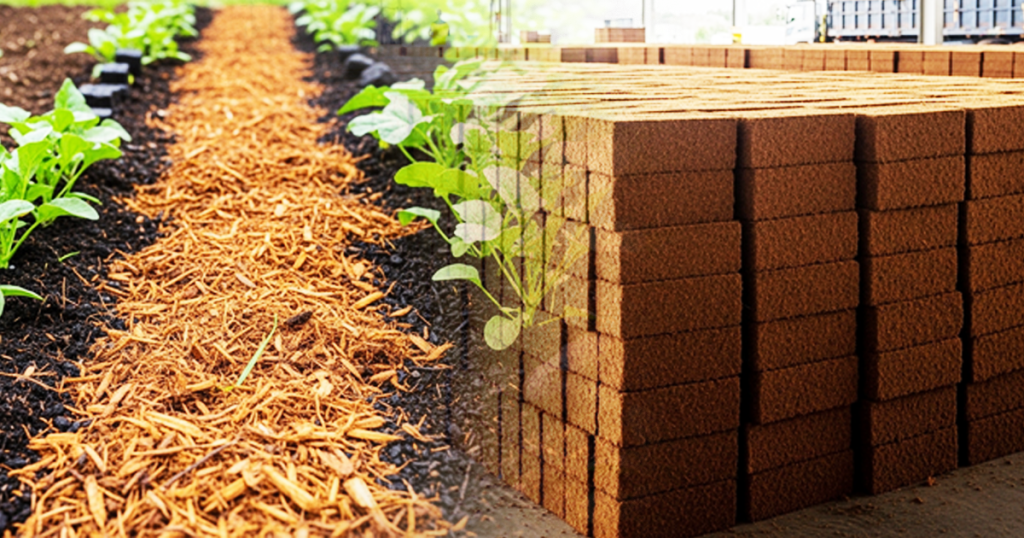
When processed, it yields two primary products: coarse fiber and cocopeat (also called coir pith), both of which are biodegradable, renewable, and abundantly available in coconut-producing countries.
The Climate Impact of Conventional Growing Media
The most common growing media in global horticulture remains peat moss, extracted from peat bogs. Unfortunately, peat bogs act as significant carbon sinks. When disturbed, they release massive amounts of carbon dioxide, contributing to greenhouse gas emissions.
According to the International Union for Conservation of Nature (IUCN), peatland drainage accounts for approximately 5% of global anthropogenic CO₂ emissions.
Replacing peat moss with cocopeat not only prevents this release but also utilizes a byproduct that would otherwise go to waste. The circular economy concept is thus embedded in coco fiber production.
How Coco Fiber Helps Mitigate Climate Change
1. Carbon Sequestration and Emission Reduction
Unlike peat moss, coco fiber is harvested without disturbing carbon-storing ecosystems. Moreover, coconut trees themselves sequester carbon during their growth, and using their husk-derived fibers locks some of that carbon in a usable form.
When used properly, cocopeat does not decompose as rapidly as other organic materials, allowing for extended carbon storage in soil.
2. Water Retention and Soil Health
Cocopeat holds up to eight times its weight in water. This property reduces the need for frequent irrigation, saving water a resource under increasing stress due to climate change.
Additionally, it improves soil aeration and microbial activity, enhancing plant growth without chemical inputs.
3. Waste Reduction and Resource Efficiency
Annually, the world produces billions of coconuts, especially in tropical countries like Indonesia, India, and the Philippines. Traditionally, the husks are discarded or burned, contributing to air pollution.
By processing this “brown waste” into valuable fiber and peat, we minimize agricultural waste and promote sustainable development.
Challenges and Opportunities in Adoption
Despite its promise, the adoption of coco fiber as a mainstream horticultural substrate faces logistical and economic barriers. Quality inconsistency, high transportation costs, and lack of farmer awareness slow down its global uptake.
However, these barriers are surmountable. Advances in processing technology, certification standards, and international collaborations are streamlining the supply chain. Governments and NGOs are beginning to support training programs for farmers and encouraging sustainable fiber industries as a climate initiative.
Research-Driven Innovation
As a researcher immersed in cocopeat studies, I have witnessed significant breakthroughs. Studies indicate that treated cocopeat can outperform peat moss in seed germination and plant yield. Further innovations include blending cocopeat with organic compost, creating tailor-made substrates suited for specific crops and climates.
Biodegradable pots made from compressed coco fiber are now being tested as a plastic alternative, potentially revolutionizing container farming and nursery operations. These applications demonstrate coco fiber’s adaptability beyond just soil amendment.