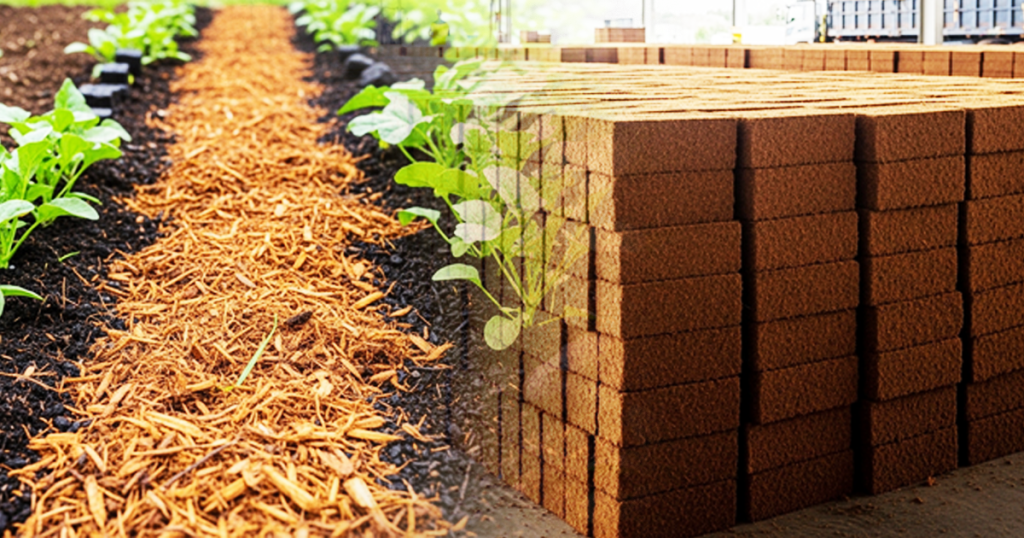
Cocopeat’s Role in Enhancing Soil Aeration and Retention
As concerns about soil degradation and unsustainable agriculture continue to rise, researchers and agriculturalists are turning to eco-friendly alternatives to enhance soil fertility.
One such solution gaining global traction is cocopeat powder a humble byproduct of coconut husks that is proving to be a powerful soil conditioner. In this article, we delve into the science behind cocopeat powder and its remarkable soil-enriching properties.
What is Cocopeat Powder?
Cocopeat, also known as coir pith or coir dust, is the spongy, peat-like material derived from the fibrous husk of coconuts. It is typically produced during the extraction of coir fiber and then processed into a fine powder through drying, sieving, and grinding techniques. The resulting material is lightweight, biodegradable, and boasts excellent water-holding capacity.
From a scientific standpoint, cocopeat consists of lignin, cellulose, and a range of micronutrients essential for plant health. The porous structure of cocopeat allows it to absorb water up to eight times its weight, making it a popular choice in horticulture and soil amendment practices.
Physical and Chemical Properties That Matter
Water Retention and Aeration
One of the most defining characteristics of cocopeat is its exceptional water retention ability. Unlike traditional soil, cocopeat holds moisture longer, ensuring that plant roots remain hydrated for extended periods. This is particularly beneficial in arid regions where water conservation is critical.
Simultaneously, the fibrous matrix of cocopeat promotes aeration in the root zone. Good aeration prevents root rot, encourages healthy microbial activity, and supports optimal nutrient uptake by plant roots.
pH Neutral to Slightly Acidic
Cocopeat typically exhibits a pH range of 5.5 to 6.5, which is ideal for a majority of horticultural plants. This slightly acidic environment enhances nutrient solubility and fosters beneficial microbial life in the soil, contributing to overall plant vigor.
Cation Exchange Capacity (CEC)
Cation exchange capacity is a measure of how well a substrate can hold and exchange positively charged ions (cations) like potassium, calcium, and magnesium. Cocopeat has a moderate to high CEC, making it an efficient medium for nutrient retention and slow release an essential trait for minimizing leaching in organic farming systems.
Environmental and Agronomic Benefits
Sustainability and Renewability
Unlike peat moss, which is harvested from ecologically sensitive bogs, cocopeat is a byproduct of the coconut industry. This makes it a sustainable and renewable resource, contributing to waste minimization and circular economy practices in agriculture.
Reduction of Soil Compaction
When mixed with native soil, cocopeat improves its structure, reducing compaction and increasing porosity. This allows roots to penetrate deeper and enhances the soil’s ability to support plant growth.
Enhanced Microbial Activity
Cocopeat serves as a suitable habitat for beneficial microbes, such as mycorrhizal fungi and nitrogen-fixing bacteria. These microorganisms play a vital role in improving nutrient availability and boosting plant immunity against soil-borne pathogens.
Applications in Modern Agriculture
Cocopeat powder is widely used in various cultivation systems, including hydroponics, nursery seedling trays, and rooftop gardens. It is also mixed with compost and fertilizers to form organic soil blends suitable for both commercial and home gardening applications.
In organic farming, cocopeat is a preferred growing medium due to its neutral chemical makeup and absence of pathogens. It is also being explored as a carrier for biofertilizers and microbial inoculants, broadening its role beyond that of a mere substrate.
A Scientific Ally for Sustainable Soil Health
Cocopeat powder exemplifies the convergence of traditional byproducts with modern agricultural science. Its unique physical and chemical properties not only enrich soil but also align with global efforts to build more sustainable and resilient food systems.
As a researcher in this field, I see cocopeat not just as a soil amendment, but as a transformative material with the potential to redefine eco-agriculture for future generations.