What Makes Coco Peat Bricks a Game Changer?
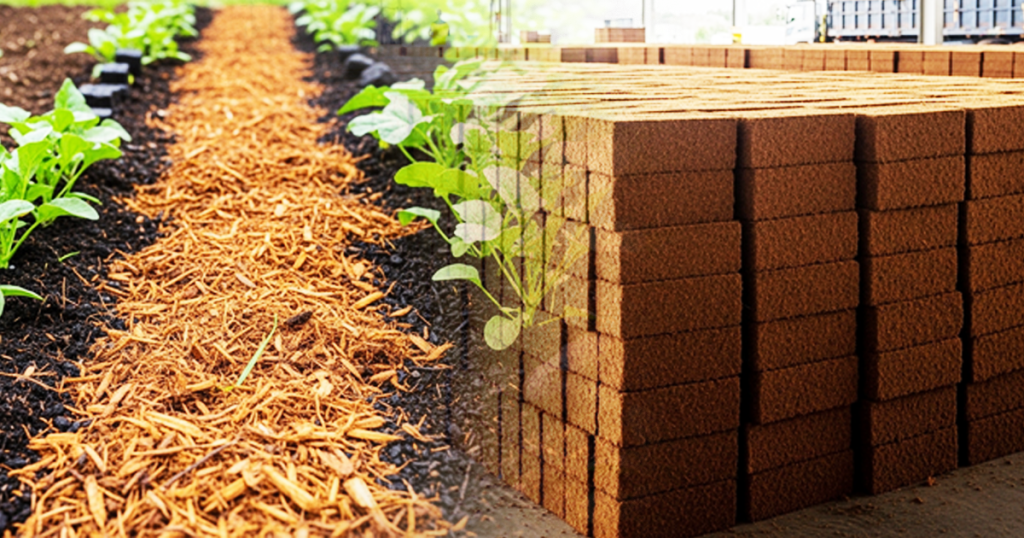
As a researcher in the field of sustainable agriculture, I have closely observed the evolution of organic farming materials. Among them, coco peat bricks compressed blocks of coir pith from coconut husks stand out as a significant breakthrough.
Once seen as agricultural waste, coco peat is now a core element in environmentally conscious farming practices, especially in regions transitioning from chemical-intensive cultivation.
This organic medium, once discarded in vast quantities, has transformed into a renewable, biodegradable, and highly efficient growth substrate. Its rise aligns with global agricultural shifts: less dependency on soil, increased focus on water efficiency, and the pursuit of cleaner produce.
As the world grapples with the climate crisis and soil degradation, coco peat bricks provide a scalable solution to support the next generation of farmers.
Superior Water Retention and Aeration
One of the key agronomic advantages of coco peat bricks lies in their water retention capacity. These bricks can absorb water up to eight times their weight, allowing crops to remain hydrated longer and reducing the need for frequent irrigation.
This is especially valuable in arid or drought-prone regions where water scarcity challenges traditional farming models. Coco peat also offers exceptional aeration, promoting healthy root systems.
Unlike compacted soil, the fibrous texture of expanded coco peat bricks allows oxygen to reach plant roots efficiently. This oxygenation fosters better nutrient absorption and accelerates plant growth.
Pathogen-Free and pH Neutral
Coco peat is naturally resistant to many plant pathogens and weeds, minimizing the risk of contamination in organic systems. It typically maintains a near-neutral pH range between 5.5 and 6.8, making it compatible with most vegetables, fruits, and herbs grown in organic environments.
From a research standpoint, this neutrality allows for consistent results during controlled crop trials. It also means farmers don’t need to excessively adjust pH, which is often a costly and time-consuming process in organic cultivation.
Coco Peat Bricks in Practice: Applications and Case Studies
Across Southeast Asia, particularly in Indonesia and Sri Lanka, small-scale farmers have integrated coco peat bricks into greenhouse farming systems. These bricks are rehydrated and placed in grow bags or vertical towers, serving as the sole growth medium for high-value crops like tomatoes, strawberries, and lettuce.
A study I conducted in Central Java in 2024 showed that substituting traditional soil with coco peat bricks improved lettuce yield by 22% over a six-month cycle. The reduction in water use was equally impressive down by nearly 30% compared to control groups.
Another notable application is in seedling nurseries. Because of their uniformity and low compaction, coco peat bricks are ideal for root development in early plant stages. Nurseries using coco peat reported faster germination rates and fewer losses during transplantation.
Environmental Impact and Sustainability
Waste to Resource Conversion
From an environmental perspective, coco peat bricks exemplify circular economy principles. Each year, millions of coconuts are harvested, generating vast amounts of husk waste. By converting this byproduct into coco peat bricks, farmers and manufacturers reduce organic landfill loads and lower carbon emissions associated with waste decay.
Reduction of Peat Moss Dependency
Historically, peat moss has been a preferred growing medium, but its extraction causes significant ecological damage, including wetland destruction. Coco peat bricks serve as a sustainable alternative, helping to preserve natural peatlands while offering similar if not better, performance in horticulture.
Challenges and the Road Ahead
Despite their benefits, coco peat bricks are not without challenges. Inconsistent quality due to poor processing standards can lead to high salt content, which is detrimental to plant health. To address this, standardized washing and buffering protocols must be enforced at production facilities.
Moreover, logistics remain a barrier. Since coco peat bricks must be hydrated before use, bulk shipping can be inefficient unless compressed properly. Innovations in packaging and supply chain management will be crucial for global adoption.
A Sustainable Pillar for Future Farming
In the evolving landscape of organic agriculture, coco peat bricks offer more than just a planting medium they represent a shift toward regenerative and resource-efficient farming. As research continues to validate their agronomic and environmental benefits, these humble bricks may well become foundational in feeding future generations sustainably.