Cocopeat: The Sustainable Fiber Revolution Hidden in Coconut Waste
As the world races to find sustainable alternatives to plastic and synthetic fibers, a humble byproduct of coconut processing is quietly emerging as a game changer.
It’s called cocopeat, and while it’s long been used in horticulture, new research is uncovering its untapped potential as a renewable fiber material.
What Is Cocopeat?
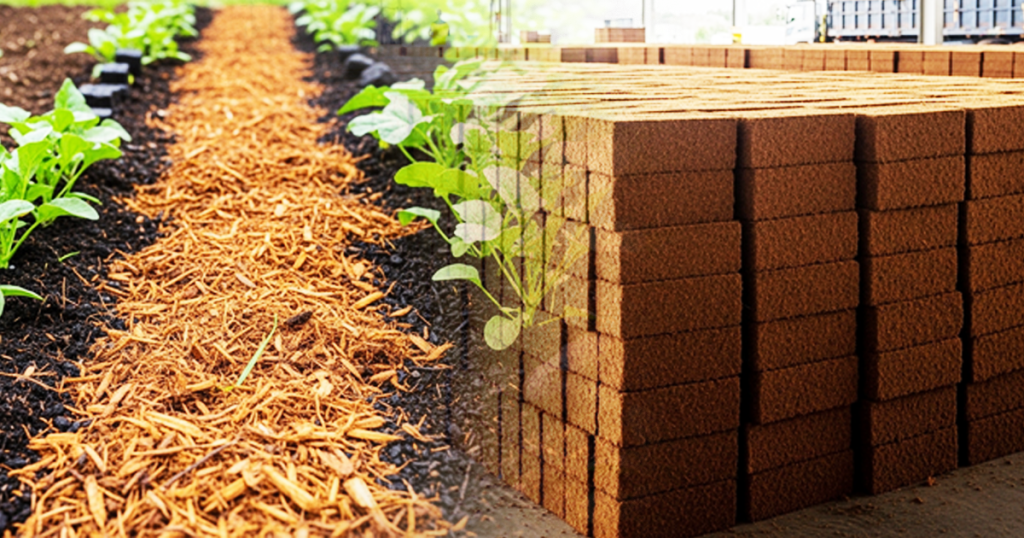
Cocopeat, also known as coir pith or coir dust, is the spongy material that lies between the coconut husk fibers. Traditionally considered waste in the coconut industry, it was often discarded or used as low-value compost. But thanks to advances in materials science, cocopeat is stepping into the spotlight as a valuable, eco-friendly fiber.
Unlike coir fiber already utilized in ropes, mats, and brushes cocopeat has been largely overlooked. Yet it boasts impressive water retention, biodegradability, and versatility. Its structure, composed of lignin and cellulose, makes it a suitable candidate for everything from biodegradable packaging to sustainable textiles.
A Researcher’s Perspective: From Soil to Sustainable Material
As a researcher focusing on coconut byproducts for over a decade, I have witnessed firsthand how cocopeat transitioned from agricultural filler to innovative raw material. Our lab initially studied its role in soil conditioning, given its excellent water-holding capacity and porosity.
However, recent work has expanded into developing cocopeat-based biocomposites that are not only biodegradable but also cost-effective.
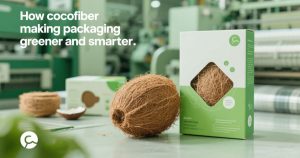
In trials conducted at our research center, we’ve successfully blended cocopeat with natural resins to create sheets that can replace single-use plastic in packaging applications. Early-stage prototypes show resilience, flexibility, and a significantly lower carbon footprint compared to conventional alternatives.
Moreover, when treated with eco-safe enzymatic processes, cocopeat fibers can be refined into non-woven textile panels, useful in automotive interiors, sound insulation, and even fashion accessories. These innovations are part of a growing movement to repurpose agricultural waste into high-value materials.
Environmental Impact and Circular Economy Potential
Cocopeat offers distinct environmental benefits. It’s a renewable, biodegradable, and carbon-neutral material. Its use supports a circular economy model, especially in coconut-producing countries where disposal of husk residue remains a logistical and environmental burden.
By repurposing cocopeat, we reduce the volume of agricultural waste while creating economic opportunities in rural areas. It also offsets the demand for synthetic polymers and fossil-fuel-derived materials, both of which carry considerable environmental costs.
In countries like Indonesia, India, the Philippines, and Sri Lanka where coconuts are a staple crop valorizing cocopeat could lead to new green industries and jobs, particularly in the sustainable packaging and eco-construction sectors.
Challenges and the Road Ahead
Despite its promise, cocopeat is not without challenges. One major hurdle is standardization. Being an organic material, its composition can vary significantly depending on the coconut variety, age, and processing methods. This makes quality control and industrial scaling a key focus for researchers and manufacturers alike.
Another issue is awareness. Outside the agriculture and horticulture sectors, few people even within the sustainability community are familiar with cocopeat’s broader applications. Bridging this knowledge gap requires collaboration between scientists, industry leaders, and policymakers.
Ongoing research aims to optimize processing techniques, enhance material properties, and develop hybrid fibers that combine cocopeat with other natural materials like hemp, jute, or bamboo.
The Fiber of the Future?
Cocopeat may not yet be a household name, but its potential as a sustainable material is too promising to ignore. With more research, public awareness, and industrial investment, cocopeat could become a cornerstone of the next generation of eco-friendly materials.
As a researcher, I see in cocopeat not just the remnants of a coconut husk, but the seeds of a sustainable future quietly waiting to be recognized and cultivated.