The Rise of Natural Alternatives in Modern Industries
As industries worldwide seek sustainable solutions, coco fiber or coir is increasingly emerging as a frontrunner in both agriculture and construction. Derived from the husk of coconuts, this fibrous byproduct once considered agricultural waste is now experiencing a renaissance.
From biodegradable grow media to eco-friendly construction composites, coco fiber is redefining what nature-based innovation looks like.
As a researcher who has spent years studying the properties and potential of cocopeat and coir-based products, I’ve observed a compelling trajectory: what began as local experimentation has evolved into global application. This evolution isn’t coincidental it’s rooted in science, sustainability, and economic necessity.
Coco Fiber in Agriculture: A Sustainable Growing Medium
Replacing Peat Moss with a Renewable Resource
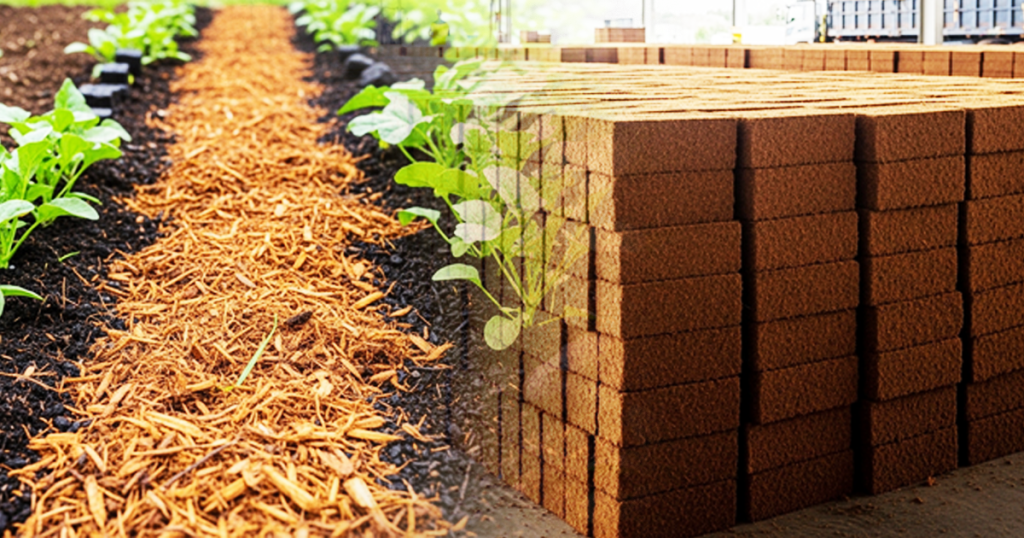
In agriculture, the shift away from peat moss a non-renewable resource with a heavy carbon footprint is accelerating. Cocopeat, the powdered form of coco fiber, offers a sustainable alternative. It holds up to eight times its weight in water and promotes aeration in soil, aiding root development and plant health.
My research team has conducted comparative trials using cocopeat versus traditional media. The results are promising: crops such as lettuce, tomatoes, and strawberries grown in cocopeat substrates showed equivalent or even superior yields.
The pH neutrality and low salinity of processed cocopeat make it ideal for a wide range of horticultural applications, including hydroponics.
A Circular Economy Approach
Coco fiber also fits seamlessly into a circular economy model. Countries with high coconut production such as Indonesia, India, Sri Lanka, and the Philippines are leveraging this byproduct to boost both local economies and environmental resilience.
Smallholder farmers are increasingly turning to coco-based substrates, not only reducing dependence on synthetic fertilizers but also improving soil health in the long term.
Building with Coir: From Fiber to Function
Natural Composites for a Greener Future
In construction, coir is finding its place in the development of green composites. These composites blend coco fiber with biopolymers or cementitious materials to create lightweight, durable building components. When treated and processed properly, coir exhibits remarkable tensile strength and resistance to microbial degradation.
Recent pilot projects have used coir-reinforced panels for thermal insulation, noise reduction, and even structural support. As part of an interdisciplinary research project, we developed prototype wall panels integrating coir with lime-based binders. The outcome was a low-carbon, breathable material suited for tropical climates.
Thermal and Acoustic Performance
Studies indicate that coco fiber has exceptional insulating properties. Its hollow, cellulose-rich structure minimizes heat transfer while dampening sound. This makes it a suitable candidate for ceiling boards, insulation mats, and even eco-bricks.
Compared to synthetic insulators, coir’s environmental impact is significantly lower, and it biodegrades naturally at the end of its lifecycle.
Challenges and the Road Ahead
Despite its benefits, widespread adoption of coco fiber faces logistical and technical hurdles. Supply chain inconsistencies, lack of standardized processing protocols, and limited public awareness remain significant barriers.
Moreover, proper retting and treatment processes are necessary to enhance fiber durability and reduce susceptibility to mold and pests.
However, with ongoing research and policy support, these barriers are increasingly surmountable. Initiatives in Southeast Asia are investing in coir-processing cooperatives and training programs, aiming to scale up production without compromising environmental integrity.
Bridging Nature and Innovation
Coco fiber stands at the intersection of tradition and innovation. What was once discarded is now celebrated as a bio-based solution to some of our most pressing environmental challenges. Whether in a greenhouse or on a building site, coir products are proving that sustainable materials can be both practical and powerful.
As a researcher, I am encouraged by the progress and inspired by the potential. With thoughtful investment, scientific rigor, and market adaptation, coco fiber can continue to gain ground not only in agriculture and construction but in our collective vision for a more sustainable future.