Coir: The Sustainable Revolution Rooted in Coconut Waste
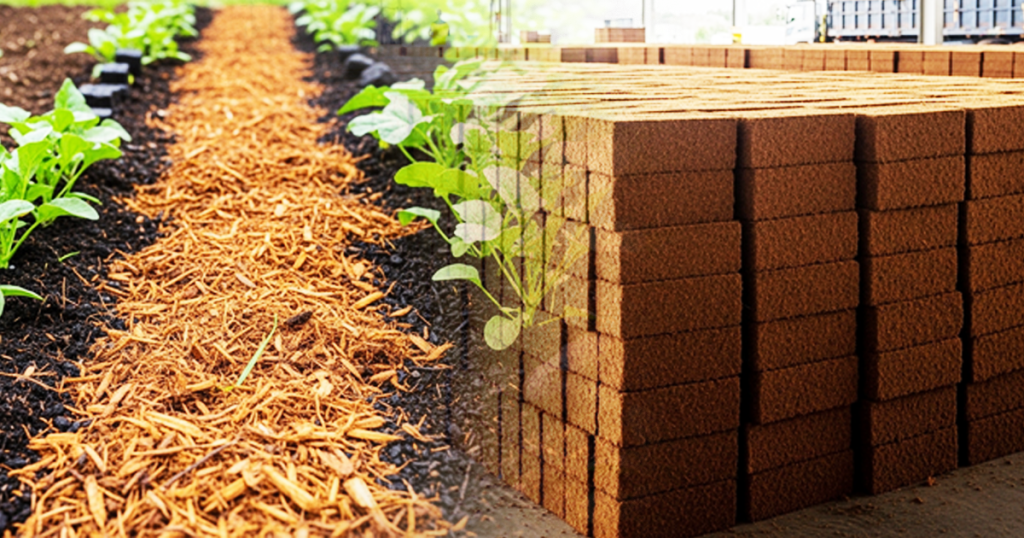
As the urgency for environmentally responsible materials intensifies, a quiet revolution is taking place led not by synthetic innovations but by a humble byproduct of the coconut industry: coir. Known widely as cocopeat in horticultural applications, this natural fiber is fast gaining ground in sustainable product design.
As a researcher deeply involved in the study of coir and its industrial applications, I have witnessed its transformation from agricultural waste to a cornerstone of eco-conscious innovation.
The Environmental Context: Moving Beyond Plastic
Global production of plastic exceeds 400 million tons annually, much of which ends up in oceans or landfills. With climate change, resource depletion, and marine pollution reaching critical levels, designers and manufacturers are under mounting pressure to adopt sustainable alternatives. Coir offers a compelling solution.
Derived from the mesocarp of coconut husks, coir is biodegradable, renewable, and abundantly available in tropical countries, particularly India, Sri Lanka, Indonesia, and the Philippines. As these regions also contend with massive amounts of coconut waste, coir’s utilization reflects a powerful example of circular economy in action.
The Science Behind Coir: A Researcher’s Insight
Coir fibers exhibit a unique combination of rigidity and elasticity, making them suitable for diverse applications. From a materials science perspective, the lignin-rich composition of coir (about 41–45%) gives it notable resistance to saltwater and microbial degradation traits rarely found in other natural fibers.
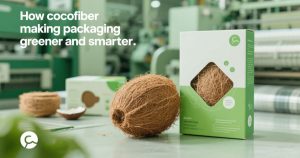
In laboratory settings, we have analyzed coir’s tensile strength, moisture retention, and thermal stability. These properties have sparked its use in a range of industries: automotive padding, geotextiles, insulation panels, biodegradable packaging, and even footwear. Unlike jute or flax, coir withstands wet environments better, positioning it as a superior option in outdoor and marine product applications.
From Soil to Showroom: Coir in Commercial Design
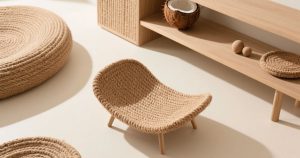
Once confined to horticulture and erosion control, coir is now redefining green design. In interior architecture, compressed coir boards are being used as wall panels and acoustic insulators. In furniture, designers are blending coir fibers with natural latex to create organic cushions and mattresses.
One striking example is the integration of coir in car interiors. Companies like Ford and Mercedes-Benz have experimented with coir composites in dashboards and door panels, citing improved sustainability scores and reduced petroleum dependency.
Moreover, coir’s aesthetic earthy textures and organic brown hues aligns seamlessly with the current design zeitgeist that favors raw, authentic, and biodegradable materials.
Challenges in Scaling Coir-Based Design
Despite its promise, coir is not without limitations. The variability in fiber quality, inconsistent supply chains, and lack of standardization present barriers to widespread industrial adoption. As a researcher, I’m particularly focused on developing stabilization and homogenization techniques to ensure predictable performance in large-scale applications.
Moreover, processing coir requires substantial water and energy, though recent innovations such as dry retting and enzymatic treatment have begun to minimize the environmental footprint.