A Researcher’s Take on the Sustainable Potential of Cocopeat Powder
As a researcher specializing in sustainable materials, I often seek alternatives that bridge innovation and environmental responsibility.
Cocopeat powder a by-product of coconut husk processing has caught global attention for its potential as an eco-friendly substitute in various sectors. But does it truly stand up as the green alternative the world needs?
Cocopeat powder is derived from the fibrous mesocarp of coconuts, commonly discarded in tropical agricultural regions. Traditionally considered waste, it is now repurposed into a versatile medium for horticulture, hydroponics, and even as a base for biodegradable products.
Its low carbon footprint, high water retention, and natural biodegradability make it a promising candidate in sustainable material science.
What makes cocopeat powder unique is not only its origin from renewable biomass but its regenerative impact. Unlike peat moss, which is mined from slow-forming bogs, cocopeat is a renewable by-product that supports circular economies in coconut-producing nations.
Thus, it helps reduce dependence on environmentally destructive materials.
Scientific Evaluation of Cocopeat’s Environmental Impact
From a research perspective, the lifecycle analysis (LCA) of cocopeat powder indicates significantly lower environmental costs compared to synthetic alternatives. Its production involves minimal energy, and when processed responsibly without chemical additives it poses negligible threat to ecosystems.
Studies have shown that using cocopeat in agriculture can reduce irrigation needs by up to 40%. Its spongy structure retains moisture efficiently, especially beneficial in arid climates. Moreover, it enhances soil porosity and microbial activity, reducing the reliance on chemical fertilizers and boosting crop yields organically.
Another compelling advantage lies in its role in waste valorization. Global coconut production generates millions of tons of husk waste annually. Transforming this biomass into a commercially viable substrate addresses waste management issues while promoting green innovation.
This is particularly significant in regions like Southeast Asia and South America, where coconut farming is integral to the economy.
Market Readiness and Global Adoption
Cocopeat powder is not just a lab success story it’s entering mainstream markets. European horticulturists have adopted cocopeat as a preferred alternative to peat moss. In India, urban gardeners use it extensively for rooftop farming.
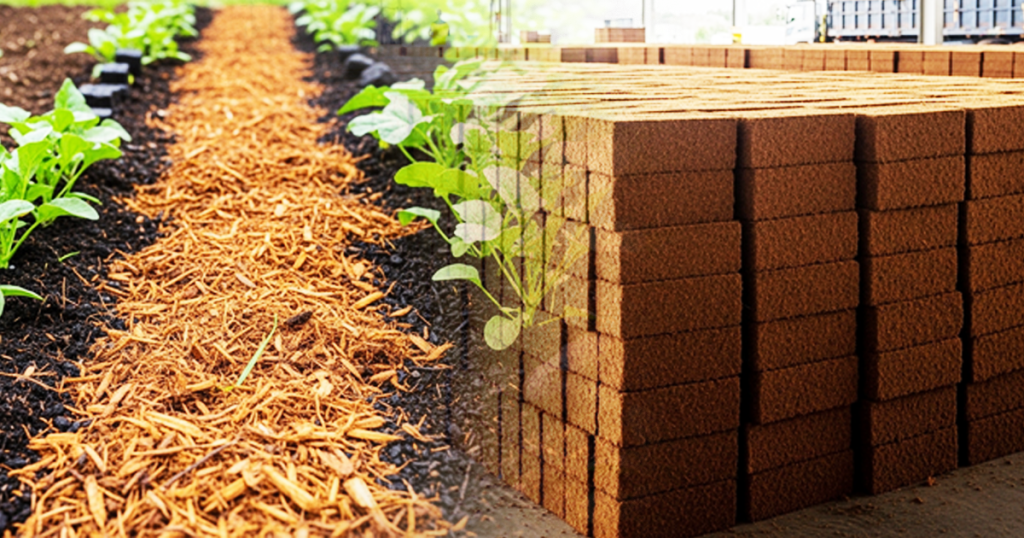
Commercial hydroponics systems in the US are integrating cocopeat blocks into their substrate solutions. However, large-scale adoption depends on consistent quality and responsible supply chains.
Variability in pH, salt content, and particle size must be addressed through standardization and rigorous processing protocols. As researchers, we need to work closely with producers to establish sustainable processing methods that retain cocopeat’s ecological value while ensuring product reliability.
Future Outlook: A Scalable, Sustainable Pathway
The potential of cocopeat powder as an eco-friendly material extends beyond agriculture. It is being explored in packaging industries as a biodegradable filler, in bio-filtration systems, and even as an additive in building composites for insulation. These innovations suggest a broad frontier of applications waiting to be tapped.
Still, widespread use must be guided by thoughtful policy and scientific oversight. Certification programs, carbon footprint labeling, and international collaboration are essential to prevent greenwashing and ensure that cocopeat’s sustainability credentials hold true.
In conclusion, cocopeat powder presents a strong case as a viable eco-alternative. Its regenerative nature, environmental benefits, and market adaptability make it a material worth championing.
As researchers, we must continue to evaluate its performance rigorously, promote ethical sourcing, and educate industries and consumers about its potential. Only then can cocopeat transition from a niche green product to a cornerstone of sustainable development.