The Silent Revolution in Agriculture: Cocopeat Blocks Take the Stage
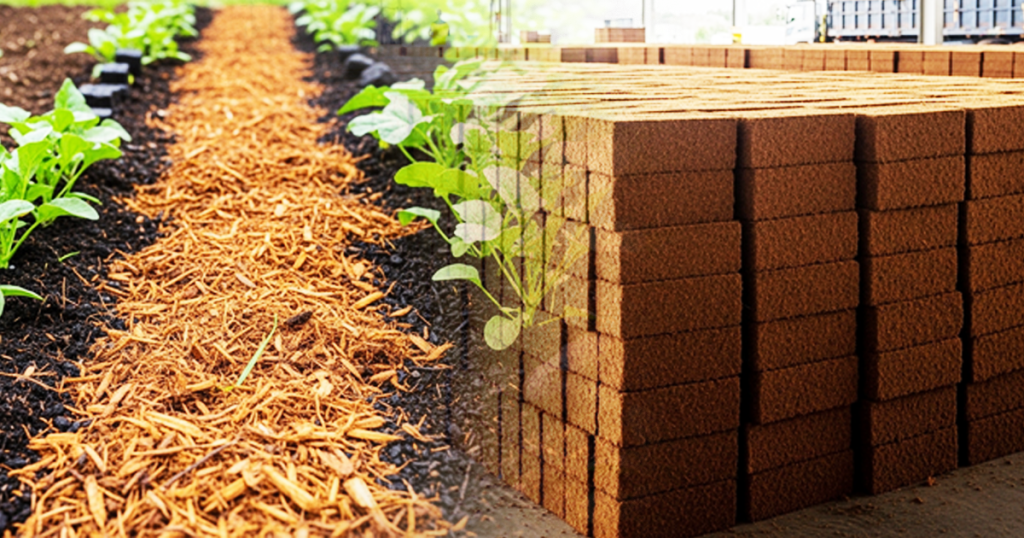
As a researcher immersed in the study of agricultural substrates, I have witnessed a quiet but impactful shift in farming practices. One of the most promising developments is the widespread adoption of cocopeat blocks. These compressed forms of coconut husk dust, once considered mere agricultural waste, have now evolved into a cornerstone of sustainable farming.
Cocopeat, also known as coir pith, was traditionally discarded or burned, contributing little to economic or environmental value. But the agricultural community began recognizing its remarkable properties: high water retention, neutral pH, excellent aeration, and its completely renewable nature. This marked the beginning of a transformation one that’s turning waste into agricultural wealth.
Today, countries like India, Sri Lanka, Indonesia, and the Philippines are not only producing cocopeat at scale but also exporting it to meet rising demand from Europe, the Middle East, and the Americas. From a technical perspective, cocopeat’s functionality rivals and in some cases exceeds traditional growing mediums like peat moss, without the environmental drawbacks.
Understanding the Science Behind Cocopeat’s Success
Moisture Retention and Soil Conditioning
Cocopeat can retain up to eight times its weight in water, making it ideal for dry and arid regions. It improves water availability in the root zone, thus reducing irrigation frequency. This property alone has made it a favorite among hydroponic growers and greenhouse operators seeking efficient water use.
Moreover, cocopeat enhances soil structure. When added to soil, it prevents compaction, promotes root penetration, and boosts microbial activity. These characteristics translate into healthier plant growth and improved yields, especially in nutrient-intensive crops like tomatoes, strawberries, and leafy greens.
pH Neutrality and Pathogen Resistance
With a natural pH range of 5.5 to 6.5, cocopeat provides a near-ideal environment for most horticultural crops. Unlike other organic substrates, it requires minimal conditioning before use. Its inherent lignin and cellulose structure also discourages the proliferation of soil-borne pathogens, providing plants with a cleaner growth medium.
Global Market Surge: From Local Waste to Export Commodity
The numbers speak volumes. Global exports of cocopeat blocks have grown by over 300% in the past decade, driven by increased demand in organic farming and urban gardening. From balcony farmers in Berlin to greenhouse giants in California, cocopeat has found a place in farms big and small.
In Indonesia alone, data from the Ministry of Agriculture show a 40% year-on-year rise in cocopeat production since 2020. Local processors, once focused on low-margin coconut products, are now upgrading their facilities to produce export-quality cocopeat blocks. This economic uplift has positively impacted rural employment and waste management practices.
Countries like the Netherlands have even begun importing raw cocopeat for reprocessing and rebranding, highlighting its growing status as a high-value substrate.
Environmental and Economic Benefits
Unlike peat moss, which is mined from bogs that take centuries to regenerate, cocopeat is a renewable byproduct. Every coconut processed yields a substantial amount of husk, which in turn can be converted into cocopeat. Its usage thus helps reduce the environmental footprint of farming while simultaneously managing agricultural waste.
Economically, cocopeat production fosters value addition in coconut-producing regions. Small and medium enterprises (SMEs) are now thriving in rural areas, offering employment opportunities, particularly for women in post-harvest processing. The supply chain is becoming increasingly organized, with certifications such as OMRI and ISO being pursued to meet export standards.
Challenges and the Road Ahead
While cocopeat offers many advantages, challenges remain. The presence of high salt content in unwashed cocopeat can be harmful to sensitive crops. Processing standards vary by region, and quality assurance remains a concern. There’s a growing need for industry-wide regulations and testing protocols to ensure consistent product performance.
From a research perspective, efforts are underway to blend cocopeat with other organic materials like biochar or compost to enhance nutrient availability. Trials in vertical farming and aquaponics are also showing promising results, suggesting even broader applications ahead.
A Golden Opportunity Rooted in Waste
What started as a byproduct now stands at the forefront of eco-friendly agriculture. Cocopeat blocks represent not just a technical innovation, but a paradigm shift where waste becomes resource, and sustainability meets profitability.
As researchers, farmers, and entrepreneurs continue to explore its full potential, cocopeat is poised to redefine the very fabric of farming. And that is a revolution worth watching.