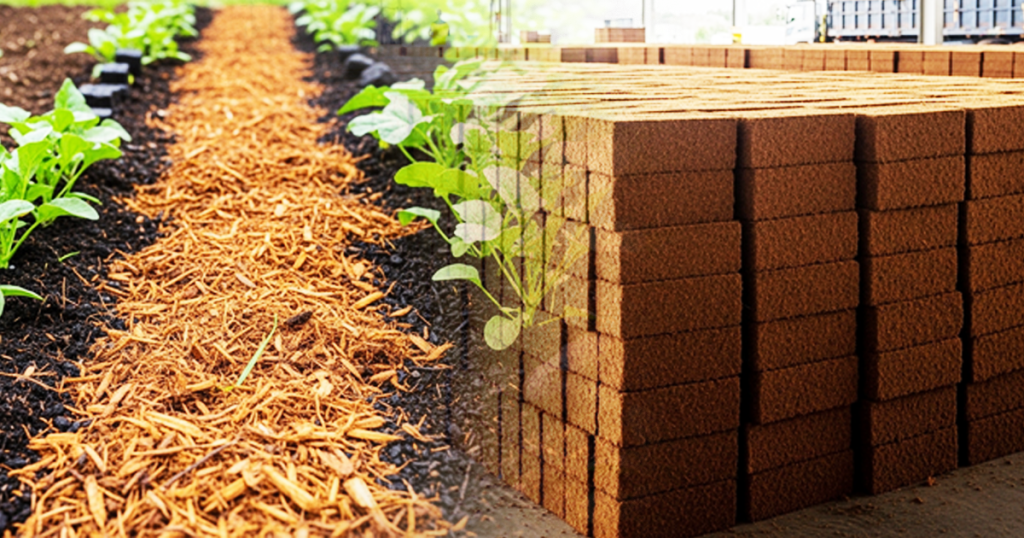
Reimagining Gardening with Cocopeat Powder
As a researcher in soil alternatives and organic substrates, I’ve watched cocopeat powder rise to prominence in modern gardening. Derived from the mesocarp tissue of coconuts, cocopeat has transformed from agricultural waste into a key enabler of sustainable practices.
It is now common to see it replacing peat moss in urban gardens, rooftop farms, and greenhouse systems. What makes cocopeat particularly suitable for gardening is its lightweight nature and superior water management.
In cities facing shrinking green spaces, gardeners require a medium that supports plant health without overburdening the environment. Cocopeat powder meets this need by providing a substrate that retains moisture, balances pH, and encourages root aeration.
Why Gardeners Are Making the Shift
Reducing Water Waste in Home Gardens
Water conservation is at the core of sustainable gardening. In my own studies across urban gardening communities, cocopeat consistently reduced water usage by 30–50% compared to traditional potting soil.
This efficiency stems from its sponge-like fibers, which trap moisture and release it slowly, allowing plants to thrive with less frequent watering.
Home gardeners in regions facing drought have found cocopeat especially useful. Its ability to prevent soil compaction ensures that even in small containers, roots can breathe and expand properly. This promotes faster growth and stronger plants with minimal input.
Supporting Organic and Chemical-Free Cultivation
Another factor driving cocopeat’s popularity is its chemical neutrality. As a naturally sterile medium, cocopeat eliminates the need for chemical treatments. I’ve tested its compatibility with various organic fertilizers and biological pest controls, confirming its synergy with eco-friendly practices. Whether it’s herbs, vegetables, or ornamental plants, cocopeat supports toxin-free gardening from seed to harvest.
Versatile Applications in Urban and Rural Gardens
Ideal for Seed Starting and Propagation
Cocopeat powder is ideal for seed starting. Its fine texture allows even the smallest seeds to germinate without resistance. In propagation labs and community nurseries I’ve worked with, germination rates improved noticeably when cocopeat replaced sand or peat-based media. It maintains a consistent moisture environment, which is critical during early growth stages.
Compatible with Raised Beds and Hydroponic Units
Urban gardeners are increasingly turning to hydroponics and raised beds to optimize limited space. Cocopeat’s capillary action makes it perfect for these systems, enabling even distribution of water and nutrients. When blended with perlite or vermiculite, it creates an ideal growing matrix for leafy greens and compact fruiting crops.
Environmental Impacts and Sustainable Supply Chains
A Renewable and Biodegradable Medium
Unlike peat moss, which takes centuries to regenerate, cocopeat is a byproduct of a yearly coconut harvest. This makes it a far more sustainable choice. Each ton of processed cocopeat reduces organic waste and contributes to circular agricultural economies. I’ve tracked the supply chains of major producers, and it’s evident that sustainable sourcing and low-impact processing are becoming industry standards.
Challenges in Adoption and Solutions
Despite its benefits, cocopeat requires proper buffering to remove residual salts. Some novice gardeners report stunted growth due to unwashed cocopeat. Education and clearer labeling are essential. As researchers, we’ve developed standard soaking and rinsing protocols to guide users in preparing high-quality media for safe use in gardens.