A Sustainable Substrate Gaining Ground
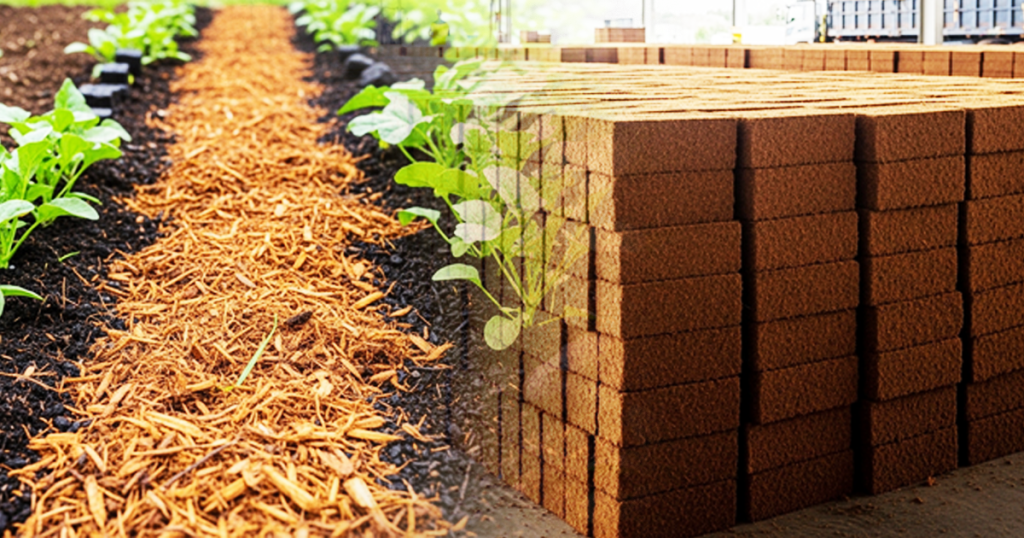
In recent years, the horticultural industry has witnessed a transformative shift in greenhouse cultivation methods. As a researcher in soilless growing media, I have observed how coco peat bricks compressed blocks made from coconut husk fibers are revolutionizing sustainable agriculture.
With increasing concerns over peatland degradation and the environmental footprint of traditional soil, growers are turning to coco peat as a renewable and efficient alternative.
Coco peat bricks are lightweight, easy to transport, and, once hydrated, expand significantly. This makes them highly suitable for greenhouse operations that require precision, consistency, and eco-efficiency.
Unlike peat moss, which takes centuries to regenerate, coco peat is a byproduct of the coconut industry, offering a closed-loop system that aligns with circular economy principles.
Why Growers Are Switching to Coco Peat
The key to coco peat’s growing popularity lies in its physical and chemical properties. It retains water exceptionally well up to eight times its weight while providing excellent aeration to plant roots. These characteristics are particularly beneficial in controlled greenhouse environments where moisture regulation and oxygenation are crucial to plant health.
Studies conducted across various climates have shown improved yields in crops such as tomatoes, cucumbers, and peppers when coco peat is used as a base substrate. In trials I’ve conducted with hybrid tomato varieties, root density and flowering time improved notably, with up to 15% faster growth compared to traditional soil beds.
Moreover, the pH of coco peat typically ranges between 5.5 and 6.5, which is ideal for nutrient uptake in most vegetables and herbs. With proper buffering to remove excess salts and potassium, coco peat bricks can be tailored for different crop requirements, making them versatile and customizable.
Environmental and Operational Benefits
Greenhouse cultivators often face the dual challenge of maintaining productivity while reducing their ecological footprint. Coco peat bricks offer a viable solution to this dilemma. As a natural and biodegradable material, they decompose slowly, making them ideal for multi-season use.
From an operational standpoint, coco peat bricks also reduce labor and transportation costs. Their compressed form minimizes storage space and expands only when needed. Once expanded, they provide a consistent texture and porosity that eliminates the variability seen in soil-based systems.
This uniformity supports precision agriculture techniques, including automated irrigation and fertigation systems.
Challenges and Future Research
While coco peat has gained traction, it is not without its challenges. One concern is high initial sodium and potassium levels, which, if not treated properly, can hinder plant growth. Therefore, pre-washing and buffering processes are essential to ensure optimal performance.
There is also the matter of regional supply chains. Most coco peat is sourced from South Asia, which could raise questions about carbon emissions related to shipping. However, efforts are underway to localize production and improve sustainability certifications.
As a researcher, I am currently exploring bioaugmentation methods to enhance the microbial profile of coco peat bricks. Adding beneficial microbes such as Trichoderma or Bacillus subtilis can improve plant immunity and nutrient absorption, further amplifying coco peat’s advantages.
Coco Peat and the Future of Greenhouse Cultivation
The agricultural sector stands at a crossroads where sustainability must meet scalability. Coco peat bricks embody this intersection. Their ability to support high-yield, low-impact farming makes them a critical tool for greenhouse growers adapting to climate change and resource constraints.
With continued research, quality control, and industry collaboration, I believe coco peat bricks will play a pivotal role in the next generation of soilless cultivation systems. They represent more than just a growing medium they symbolize a shift toward more responsible and resilient food production models.