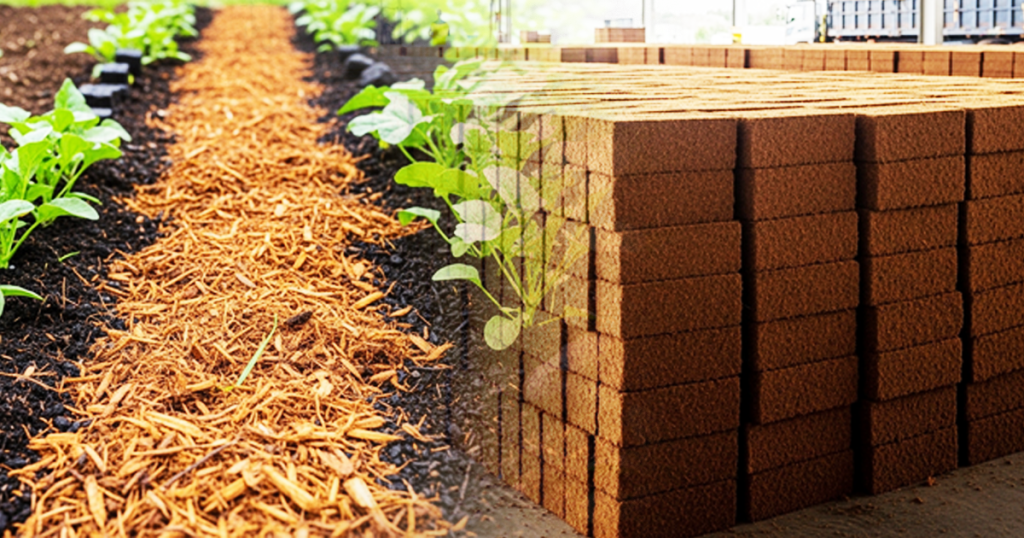
The Rise of Coco Peat in Sustainable Agriculture
As a researcher deeply involved in the study of sustainable growing media, I have witnessed a transformative shift in how urban agriculture is evolving. Among the many innovations, one stands out for its simplicity and impact: coco peat bricks.
Derived from the fibrous husk of coconuts, coco peat also known as coir pith has emerged as a game-changer for city-based farming initiatives. Urban agriculture demands solutions that are both compact and environmentally conscious.
Coco peat bricks fit this requirement perfectly. When soaked in water, these compressed bricks expand up to eight times their original volume, creating a fluffy, well-aerated medium ideal for growing a wide range of crops.
Their biodegradable nature, coupled with water retention capabilities, makes them especially suited for rooftop gardens, vertical farms, and container-based growing systems.
The Science Behind Coco Peat Bricks
Coco peat is primarily composed of lignin and cellulose, giving it a spongy structure that retains moisture while allowing excess water to drain. This balance is crucial for root health and nutrient absorption.
As I’ve tested across multiple urban crop types lettuce, tomatoes, microgreens the results have consistently shown faster germination and healthier root systems in coco peat compared to traditional soil.
Moreover, coco peat bricks are pH-neutral, typically ranging between 5.5 and 6.5. This minimizes the risk of nutrient lockout, allowing urban farmers to achieve better crop yields with less reliance on synthetic fertilizers. From a research standpoint, their ability to support hydroponic and aquaponic systems also adds to their versatility.
A Circular Economy Solution
In the era of climate change and resource scarcity, coco peat offers more than agricultural utility it embodies the principles of circular economy. The raw material is a by-product of coconut processing, which would otherwise go to waste or be incinerated. By converting this organic waste into high-performance growing media, we are closing loops and reducing carbon footprints. This aligns well with the goals of green cities.
Municipalities in Southeast Asia and parts of Europe have already begun integrating coco peat-based systems into community gardens and public green spaces. My collaborations with local governments have revealed strong interest in using coco peat for its low-maintenance appeal and sustainability credentials.
Challenges and Opportunities in Commercial Scaling
While the benefits are evident, the widespread adoption of coco peat in urban farming is not without challenges. The process of buffering removing excess potassium and sodium from raw coir requires quality control. Unprocessed coco peat may hinder plant growth if not properly treated.
Additionally, urban farmers often lack awareness of how to use coco peat bricks effectively. Educational outreach and demonstration projects are crucial. In our recent pilot program in Jakarta, we distributed buffered coco peat bricks along with seedlings and provided training to apartment residents. Within weeks, balconies turned into thriving mini-gardens a small-scale revolution in food security.
Another opportunity lies in integrating sensors and IoT devices into coco peat systems. These technologies can help monitor moisture and nutrient levels in real time, making precision farming feasible even in tight city environments.
Looking Ahead: Coco Peat in the Smart City Paradigm
Coco peat is more than a soil substitute it is an enabler of resilient food systems. As cities grow denser and more vertical, the need for lightweight, clean, and productive growing mediums will intensify. With climate challenges mounting, urban farming is no longer an option; it is a necessity.
My ongoing research focuses on enhancing the microbial properties of coco peat to further boost its agricultural potential. There is also a growing interest in mixing coco peat with biochar or compost to enrich its nutrient profile without synthetic inputs.
The humble coco peat brick, often overlooked, is carving out a significant role in the future of urban sustainability. From apartment balconies to urban rooftops, it is reshaping how we grow, consume, and think about food in the modern city.