The Plastic Problem We Can’t Ignore
Plastics have become an inseparable part of modern life durable, cheap, and versatile. However, the environmental cost of plastic is staggering. According to the United Nations, over 400 million tons of plastic waste are produced globally each year, with at least 14 million tons ending up in our oceans.
These synthetic polymers take centuries to degrade and often break down into microplastics, infiltrating food chains and water systems.
As a materials researcher focusing on sustainable alternatives, I’ve observed a significant surge in interest around plant-based solutions. Among them, coco fiber also known as coir has emerged as a promising biodegradable substitute in various industries traditionally dominated by plastics.
What Is Coco Fiber?
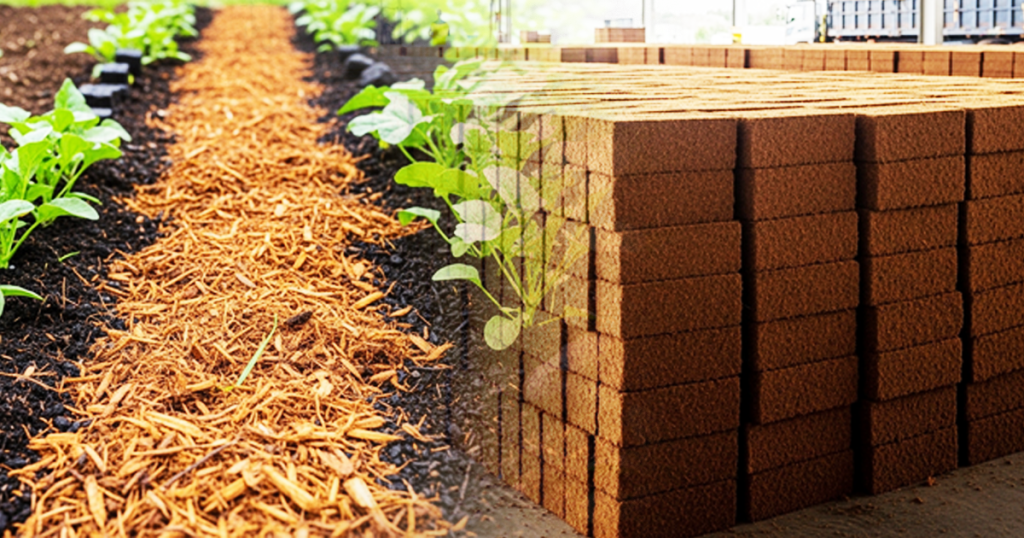
Coco fiber is the coarse, brown fiber extracted from the outer husk of coconuts. It has been used for centuries in rope-making, doormats, and brushes. But today, its potential applications are expanding rapidly, especially in the context of sustainability and green manufacturing.
Coir is tough, naturally antimicrobial, and renewable. As it is a byproduct of the coconut industry, its use adds value to agricultural waste, helping reduce overall biomass that might otherwise be discarded or burned.
From Husk to Hope: A Green Alternative
Packaging Revolution
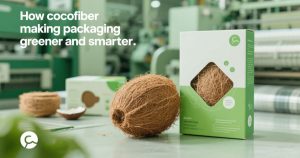
One of the most exciting developments is the use of coco fiber in biodegradable packaging. Companies are now engineering molded fiber containers made from coir to replace polystyrene and plastic foams. These packaging solutions decompose naturally in composting conditions within 60 to 90 days unlike plastic, which can take hundreds of years.
As a researcher, I’ve worked with prototype packaging blends that incorporate both coir and natural binders such as starch or alginate. These materials not only mimic the insulating properties of expanded polystyrene but also exhibit greater breathability making them ideal for shipping fresh produce.
Construction and Automotive Materials
The construction and automotive sectors are also integrating coco fiber as a reinforcement material in composites. When blended with resins or bio-based polymers, coir significantly improves mechanical strength while reducing the carbon footprint.
Car interiors, ceiling tiles, and insulation panels now increasingly use coir mats in place of synthetic fiber-glass alternatives. These materials not only offer comparable durability but are safer for workers to handle and fully recyclable.
Soil and Water Remediation
Coco fiber is also being deployed in environmental cleanup initiatives. Coir pith (a finer byproduct) has high water retention capacity and can act as a filtration medium to trap heavy metals and microplastics from contaminated water bodies.
Several pilot projects in Southeast Asia have tested coir-based filters in urban water systems, showing impressive results in reducing particulate pollutants.
The Challenges Ahead
Despite its benefits, coco fiber is not a silver bullet. One primary challenge is scalability. Unlike plastic, whose supply chains are well established and optimized, coir processing still requires considerable manual labor and energy. Additionally, regional variations in fiber quality affect consistency in mass production.
Another concern is cost-effectiveness. While prices are decreasing with technological improvements, bio-based alternatives like coco fiber often remain more expensive than fossil-based plastics, especially in commodity markets.
However, as regulatory pressure mounts against single-use plastics, and as consumer preferences shift toward sustainable goods, the economic feasibility of coco fiber is rapidly improving.
Toward a Circular Future
The story of coco fiber is emblematic of a larger transformation: a shift from linear, extractive industries to circular, regenerative systems. By turning agricultural waste into valuable materials, we are not just cleaning up plastic’s mess we’re reimagining how we design and consume.
As researchers, manufacturers, and consumers unite under the banner of sustainability, innovations like coco fiber offer a tangible path forward. It may not replace plastic in every application, but where it does, it leaves a far lighter footprint.