Rethinking Growth Mediums in the Age of Climate Crisis
As a researcher immersed in the evolving dynamics of sustainable agriculture, I have closely followed the transition from traditional soil-based cultivation to more ecologically responsible alternatives.
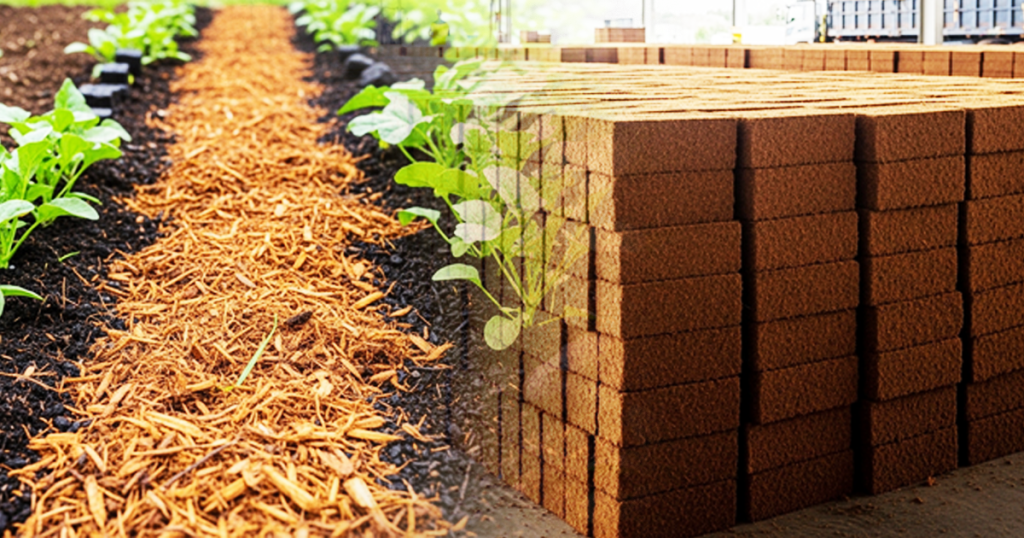
Among the most promising solutions today is cocopeat, particularly in the form of compact bricks. Derived from the fibrous husk of the coconut, cocopeat is not just a by-product it’s a transformative medium that’s redefining horticultural practices across continents.
The global shift toward eco-friendly farming is no longer a preference it’s a necessity. With increasing soil degradation, water scarcity, and mounting pressure to reduce carbon footprints, growers are actively searching for materials that are renewable, biodegradable, and high-performing. Cocopeat bricks meet all these demands while contributing to the circular economy.
What Makes Cocopeat Bricks Environmentally Revolutionary?
Cocopeat, also known as coir pith or coir dust, is a spongy, fibrous material that retains moisture exceptionally well. When compressed into bricks, it becomes a practical, lightweight, and easily transportable growing medium. Once hydrated, these bricks expand significantly, offering a substrate rich in organic matter and natural nutrients.
Unlike peat moss which is harvested from sensitive bog ecosystems and takes centuries to regenerate cocopeat is a sustainable alternative produced from the waste of coconut industries. In countries like India, Sri Lanka, and Indonesia, where coconut production is abundant, cocopeat has turned into a valuable export commodity.
Research has shown that cocopeat bricks have a water retention capacity of up to eight times their weight, reducing the need for frequent irrigation. Their high porosity also promotes better root aeration, leading to healthier plant development. Moreover, cocopeat is pH neutral and resistant to fungal pathogens, making it ideal for both hydroponic systems and soil amendment.
Applications in Horticulture and Beyond
From urban rooftop gardens to industrial greenhouses, cocopeat bricks are now integral to modern horticulture. They support the growth of a wide variety of crops including tomatoes, strawberries, peppers, and leafy greens. In my recent field trials, crops grown in cocopeat media showed faster germination rates and improved nutrient uptake compared to those grown in conventional soil.
Additionally, cocopeat bricks are being used in landscaping, lawn restoration, and even erosion control. Their lightweight nature makes them easy to handle and install in remote or elevated spaces, including vertical farming systems.
One of the more fascinating developments is their integration with organic fertilizers and microbial inoculants to form bioactive grow blocks. These blocks not only serve as plant media but also actively enhance soil biodiversity and resilience.
Economic and Environmental Impact
The economic potential of cocopeat is equally compelling. For coconut-producing nations, cocopeat exports contribute to rural employment and industrial diversification. Entrepreneurs are now setting up decentralized units to collect, clean, and compress coir dust into standardized bricks providing income while reducing agricultural waste.
From an environmental perspective, cocopeat usage results in significant water savings and reduced use of chemical fertilizers. It also mitigates waste disposal challenges, since what was once discarded as agro-waste is now being monetized and recycled.
What’s more, using cocopeat helps sequester carbon and reduce dependence on synthetic substrates. In climate-sensitive zones, especially in arid and semi-arid regions, the water-holding capacity of cocopeat can be the difference between crop survival and total failure.
A Path Forward for Sustainable Agriculture
As the urgency for sustainable solutions intensifies, cocopeat bricks are emerging as a simple yet powerful tool in the global horticultural toolkit. They represent a synthesis of traditional wisdom and modern science turning waste into a resource and offering tangible benefits to growers, consumers, and ecosystems alike.
In the years ahead, it will be vital for researchers, policymakers, and agricultural practitioners to collaborate in optimizing production techniques, improving quality standards, and expanding awareness about cocopeat’s potential. If scaled appropriately, cocopeat can play a decisive role in greening the globe, one brick at a time.