The Silent Revolution Beneath Our Feet
As a researcher in sustainable agriculture, I often find that some of the most powerful innovations lie hidden in the most unassuming materials. One such marvel is coco peat, a humble byproduct of the coconut industry that is fast transforming modern horticulture.
Known for its porous texture, high water retention, and biodegradable nature, coco peat also called coir pith has become a cornerstone of eco-friendly growing mediums. But how exactly does a discarded coconut husk become a powerful soil booster? The answer lies in a journey of refinement, science, and sustainability.
Understanding the Origins: Waste to Worth
Coco peat originates from the mesocarp of coconut husks, a fibrous layer between the hard shell and the outer skin. Traditionally discarded or burned, these husks once contributed to environmental burden. Today, they are processed into a valuable agricultural input.
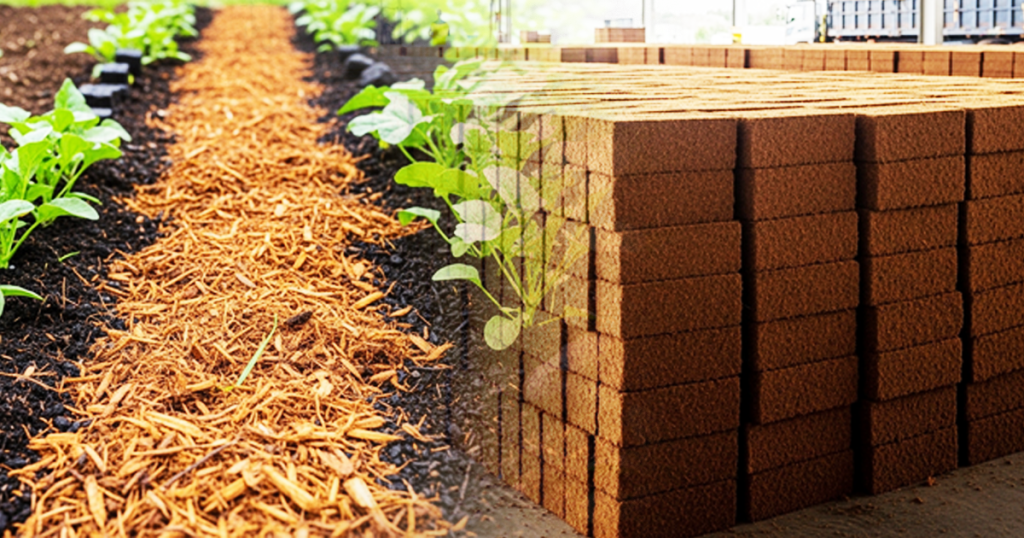
Once collected, the husks undergo retting a soaking process that helps separate fibers from the pith. The pith, or coir dust, is then washed, dried, and sieved to eliminate impurities. The final product is compacted into bricks or blocks using hydraulic pressure, creating a lightweight, easy-to-transport growing medium.
The significance of this transformation extends beyond waste management. In regions such as India, Sri Lanka, and Indonesia, coco peat production has not only provided a sustainable use for agricultural waste but also generated employment opportunities in rural areas.
Why Coco Peat Matters in Sustainable Agriculture
From a soil science perspective, coco peat offers multiple agronomic advantages. Its sponge-like texture allows it to hold water up to eight times its weight, reducing irrigation frequency and promoting root health. It is chemically neutral, with a pH of 5.5 to 6.5, making it suitable for a wide range of crops.
Moreover, coco peat is free from weed seeds and pathogens when properly processed. Unlike traditional peat moss, which is harvested from slowly regenerating bogs, coco peat is renewable and available in abundance. For hydroponics, urban gardening, and greenhouse farming, it serves as both a soil amendment and a stand-alone medium.
What distinguishes coco peat bricks from loose peat is their compressed form. These bricks are highly efficient in transport and storage. When soaked in water, they expand significantly making them both practical and economical for large-scale horticulture projects.
Scientific Challenges and Quality Control
Despite its benefits, not all coco peat is created equal. One of the main concerns is salt content, which can be detrimental to plant growth. That’s why extensive washing and buffering are necessary to remove soluble salts and maintain electrical conductivity (EC) within safe limits.
Our lab tests routinely examine coco peat for EC, pH balance, cation exchange capacity (CEC), and microbial presence. High-quality coco peat must be well-buffered, especially when used for sensitive crops like strawberries or herbs.
Furthermore, consistency in particle size is critical. Finer particles may impede aeration, while larger chunks could reduce water-holding capacity. Standardization and certification have become key issues in the global coco peat trade.
Toward a Circular Agricultural Future
The future of agriculture must lie in materials that close the loop repurposing waste into resources. Coco peat bricks exemplify this circularity. They are biodegradable, renewable, and reduce dependency on synthetic media.
Recent studies have also explored coco peat as a carrier for beneficial microbes, enhancing soil biodiversity and nutrient cycling. Others investigate blending it with compost, biochar, or even mycorrhizal fungi for enhanced plant synergy.
In my view, the journey from coconut husk to soil booster symbolizes a larger shift in agricultural thinking where value is found not in new chemicals, but in rethinking what we already have.