The Science Behind Transforming Agricultural Waste into a Valuable Resource
As a researcher in biomass valorization, I’ve long been fascinated by how organic waste can be reengineered into products with environmental and economic value. Among these, cocopeat powder stands out as a powerful example of circular economy in action.
This fine, fibrous material once discarded as waste during coconut processing is now being repurposed into what many call “sustainable gold.”
Coconut farming generates an estimated 60 million metric tons of husk waste annually. Traditionally, this waste has been either burned or left to decay, contributing to methane emissions and posing disposal problems.
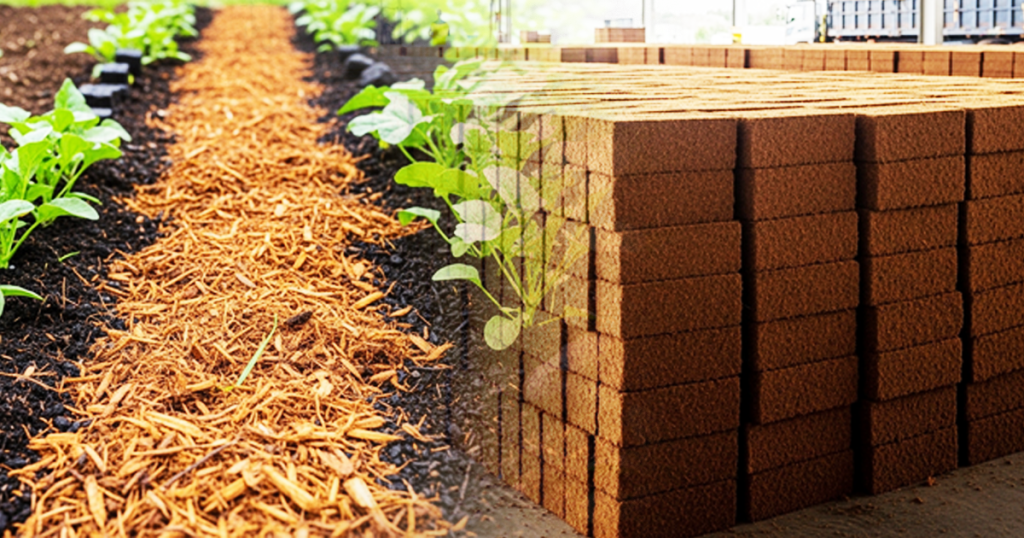
Cocopeat powder, derived from the pith portion of the husk, is now proving its worth as a sustainable substrate for agriculture, hydroponics, and beyond. The shift from waste to resource begins with the drying, screening, and refining of coir pith into powder.
This process not only diverts biomass from landfills but also unlocks a renewable material with outstanding ecological performance. With global interest in sustainable farming and climate-resilient infrastructure rising, cocopeat powder is rapidly becoming a key player in green technology.
Applications That Extend Far Beyond Soil Replacement
Cocopeat powder is most commonly used as a soil conditioner due to its excellent aeration and water-retention capabilities. However, as research progresses, its utility is extending into areas previously dominated by synthetic and extractive materials.
In horticulture, cocopeat replaces peat moss an unsustainable material harvested from fragile bogs. Unlike peat, cocopeat is renewable and does not deplete natural carbon sinks. Studies have shown that using cocopeat in seedling nurseries improves root development and germination rates while requiring less water and fertilizer.
In hydroponic systems, its neutral pH and pathogen-free nature make it an ideal inert medium. Additionally, environmental engineers are testing cocopeat’s ability to act as a biofilter for greywater treatment, where its porous structure effectively traps pollutants.
More experimental uses include mixing cocopeat with lime and clay to form biodegradable construction panels, demonstrating its versatility as a green building component. These innovations show the immense potential of cocopeat as more than just a soil alternative it’s a building block for a sustainable bioeconomy.
Economic Opportunities and Community Impact
The rise of cocopeat powder is not just an environmental story it’s an economic one. In coconut-producing countries such as Indonesia, India, the Philippines, and Sri Lanka, cocopeat processing facilities are generating employment in rural areas.
Small-scale enterprises are capitalizing on the demand for eco-friendly substrates, and women-led cooperatives are finding new income streams through coco product manufacturing.
By monetizing what was once agricultural waste, these communities are integrating into global value chains while reducing their environmental burden. This model supports SDG 12 (Responsible Consumption and Production) and SDG 8 (Decent Work and Economic Growth), making cocopeat powder a material that benefits both people and the planet.
Research and Standardization: The Next Step for Global Expansion
Despite its promise, challenges remain. Not all cocopeat is equal salinity, pH variability, and microbial contamination can affect performance. As researchers, we are working to develop standardized treatment protocols such as buffering, washing, and drying techniques that ensure consistent quality.
Academic partnerships and private-sector collaboration are essential for scaling these innovations. Additionally, carbon footprint labeling and life-cycle assessments can help validate cocopeat’s sustainability credentials and increase consumer trust.
With the right regulatory frameworks and investment in research, cocopeat powder could lead a new wave of green infrastructure and agriculture, particularly in regions grappling with soil degradation and water scarcity.
A Golden Opportunity in the Age of Sustainability
Cocopeat powder exemplifies how simple, nature-based solutions can drive complex sustainability outcomes. By transforming coconut husk waste into a multifunctional material, we are not only reducing environmental harm but also building resilient economies.
From greenhouses to greywater systems, from microenterprises to megafarms cocopeat is turning coconut waste into sustainable gold. As a researcher, I see it as a prime example of how local solutions can solve global problems.