The Agricultural Challenge in the Face of Climate Change
Modern agriculture stands at a crossroads. While global food demand continues to rise, arable land shrinks, and climate change accelerates soil degradation. In the search for sustainable, scalable solutions, bio-based materials have taken center stage.
One such material cocopeat powder is rapidly emerging as a game-changer in sustainable farming. As a researcher in agricultural substrates, I have explored the potential of cocopeat, particularly its powdered form, as a solution for resilient farming systems.
Derived from the husk of the coconut (Cocos nucifera), cocopeat powder is not just a byproduct; it is a renewable resource that holds tremendous promise for enhancing soil health, water retention, and plant growth in both open-field and controlled-environment agriculture.
What is Cocopeat Powder?
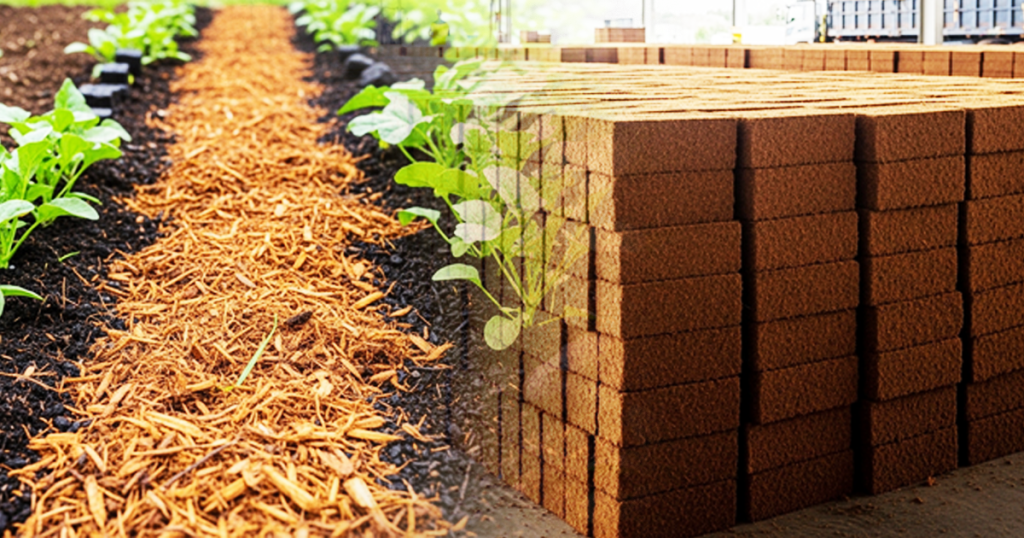
Cocopeat powder is the finely ground version of coconut coir, processed from the fibrous material found between the hard internal shell and the outer coat of a coconut. When ground into a fine powder, it exhibits unique physicochemical properties that are ideal for soil conditioning and hydroponic systems.
Unlike traditional substrates such as peat moss, which deplete natural wetlands and contribute to greenhouse gas emissions, cocopeat powder is eco-friendly and biodegradable. It can retain moisture up to eight times its weight, making it particularly useful in drought-prone regions.
Key Agronomic Benefits
Water Retention and Aeration
Cocopeat powder’s porous structure allows for excellent aeration while simultaneously holding substantial amounts of water. This dual capacity reduces irrigation frequency and supports healthy root development, particularly in crops sensitive to overwatering or poor drainage.
Soil Rejuvenation and Microbial Activity
Research has shown that when mixed with degraded soils, cocopeat powder enhances microbial biodiversity and improves soil texture. Its natural lignin content fosters the proliferation of beneficial microbes, which in turn contribute to nutrient cycling and plant resilience.
pH Neutrality and Cation Exchange Capacity
Cocopeat powder typically has a near-neutral pH (5.8 to 6.5), making it suitable for a broad range of crops. Its high cation exchange capacity (CEC) also allows it to hold and slowly release nutrients, optimizing fertilizer use and reducing leaching.
Application in Future Farming Models
Hydroponics and Soilless Systems
With urban agriculture on the rise, soilless cultivation systems are becoming increasingly important. Cocopeat powder serves as an ideal substrate in hydroponics and vertical farming setups due to its sterility, light weight, and water-holding capacity. Furthermore, its biodegradable nature aligns with the zero-waste goals of circular agriculture.
Climate-Resilient Agriculture
In regions facing erratic rainfall and soil salinity issues, cocopeat powder presents a viable adaptation strategy. It acts as a soil buffer, maintaining moisture and improving structure even in extreme conditions. Its use in mulching and seed starting also supports climate-smart agriculture practices.
Sustainability and Circular Economy
From a life-cycle perspective, cocopeat powder contributes to waste valorization. Millions of tons of coconut husks are discarded annually across Asia and Africa. Processing them into value-added agricultural inputs not only reduces environmental waste but also creates economic opportunities for rural communities.
Additionally, the carbon footprint of cocopeat powder is significantly lower than that of synthetic substrates. When produced using solar drying and minimal chemical processing, it becomes one of the most sustainable growing mediums available today.
The Road Ahead
While cocopeat powder is not a panacea, it represents a meaningful step toward the integration of renewable resources in agriculture. Further research is needed to optimize its use across different crop types and climate zones.
Efforts should also focus on standardizing production and improving supply chain logistics to make this bio-based innovation globally accessible.
As we face the dual challenge of feeding a growing population and restoring environmental balance, embracing materials like cocopeat powder is not just innovative it’s imperative.