A Natural Solution for Modern Farming Challenges
As a researcher immersed in the study of sustainable growing media, I have observed a notable trend: cocopeat blocks are becoming a preferred alternative to traditional soil amendments.
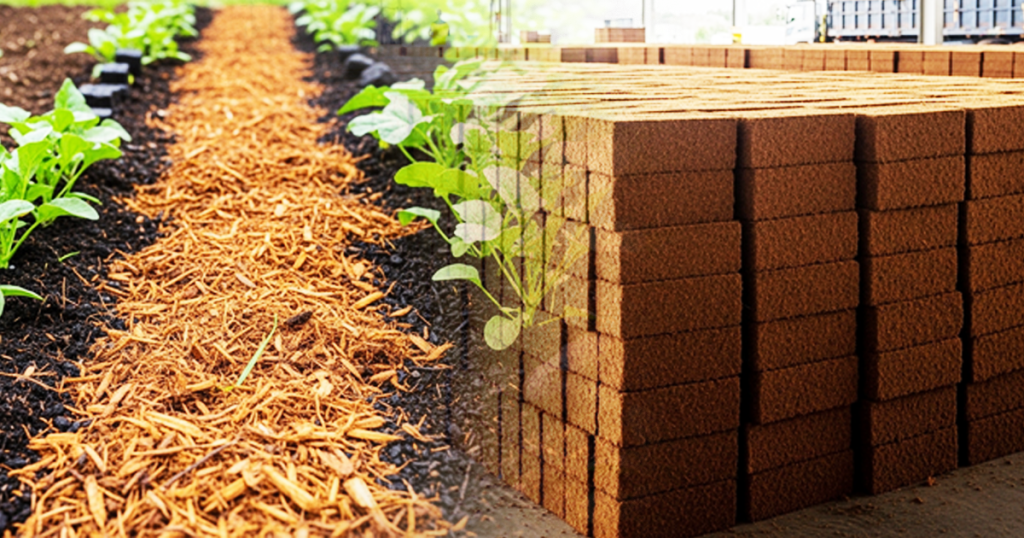
Derived from the fibrous husk of coconuts, cocopeat also known as coir pith is gaining global recognition for its role in eco-conscious agriculture. What was once considered agricultural waste has now become a core component of soil health and water conservation strategies.
The rise of cocopeat blocks coincides with a broader shift toward organic farming and sustainable resource use. With water scarcity and soil degradation threatening agricultural productivity worldwide, growers are under pressure to adopt solutions that are both effective and environmentally friendly.
Cocopeat provides a unique balance of aeration, moisture retention, and biological neutrality, making it suitable for a wide range of crops, from leafy greens to fruiting plants.
The Science Behind Cocopeat Blocks
Cocopeat blocks are typically compressed forms of coir pith, which expand significantly when hydrated. Their structure promotes optimal root development and minimizes the risk of fungal infections by maintaining adequate drainage. Laboratory analyses show that cocopeat maintains a pH range of 5.5 to 6.5, an ideal environment for most crops.
From a research standpoint, the material’s cation exchange capacity (CEC) is particularly noteworthy. This trait allows cocopeat to retain essential nutrients and release them to plant roots over time, reducing the need for chemical fertilizers.
Furthermore, due to its biodegradable nature, cocopeat poses minimal long-term environmental risks compared to synthetic substrates like rockwool.
Economic and Ecological Benefits
The scalability of cocopeat production adds to its attractiveness. Countries with abundant coconut cultivation such as India, Indonesia, and the Philippines are leveraging this by-product into high-value exports. For farmers in developing regions, cocopeat blocks offer a low-cost, renewable resource that enhances soil without intensive processing or additives.
In terms of sustainability, cocopeat plays a crucial role in reducing agricultural runoff and conserving water. Studies have shown that fields treated with cocopeat require up to 30% less irrigation.
This benefit is especially impactful in arid regions where water access is limited. Moreover, cocopeat helps sequester carbon in the soil, contributing to efforts in climate change mitigation.
Applications in Controlled Environment Agriculture
The popularity of cocopeat blocks has surged within controlled environment agriculture (CEA), including hydroponics and greenhouse systems. Its consistency and cleanliness make it a reliable medium for sterile cultivation.
Unlike peat moss which is non-renewable and extracted from endangered bogs cocopeat is a more sustainable option that aligns with global efforts to preserve natural habitats.
Recent pilot projects in urban vertical farms across Asia and Europe have shown promising results. Tomato plants grown in cocopeat blocks demonstrated improved root density and yield quality compared to those in perlite or vermiculite substrates.
These findings underscore cocopeat’s potential to support intensive urban agriculture while minimizing environmental impact.
Challenges and Future Research Directions
Despite its many advantages, cocopeat is not without challenges. High salt content in raw coir materials can pose risks to sensitive crops if not properly washed and buffered. Quality control, therefore, remains a critical factor in its widespread adoption.
As a researcher, I advocate for further standardization in cocopeat processing techniques. Improved washing protocols, nutrient enrichment, and microbial treatments are areas ripe for innovation. Additionally, more longitudinal studies are needed to assess the cumulative effects of cocopeat on soil microbiota and plant resistance to disease.
Looking ahead, collaboration between academia, agritech startups, and coconut producers will be key. With proper investment and scientific rigor, cocopeat blocks could redefine sustainable agriculture and offer a viable path toward greener food systems.