Coconut Fiber: A Sustainable Alternative Gaining Global Momentum
As sustainability challenges mount and industries pivot toward eco-friendly practices, one natural material is quietly gaining ground: coconut fiber, commonly referred to as coir. Derived from the husk of the coconut, this organic byproduct is emerging as a powerful alternative to synthetic fibers, particularly in agriculture, construction, packaging, and textiles.
As a researcher who has spent the last several years investigating the properties and industrial applications of cocopeat and coir, I’ve observed a notable shift in how this material is valued not just in tropical countries where coconuts are abundant, but globally, as businesses seek biodegradable and renewable resources.
A Natural Solution to a Synthetic Problem
The environmental cost of synthetic fibers is well-documented. From microplastic pollution in oceans to the high carbon footprint of petroleum-based products, the pressure to find safer alternatives has never been greater. Coir presents a biodegradable, durable, and renewable solution that meets the moment.
In its raw form, coconut fiber exhibits high tensile strength and resistance to saltwater degradation. These characteristics make it ideal for various industrial uses. In erosion control, coir mats stabilize soil and promote vegetation growth, outperforming plastic-based meshes.
In the automotive industry, car manufacturers such as Mercedes-Benz have already begun incorporating coir composites in seat cushions and paneling.
Agricultural Applications: Cocopeat Leads the Way
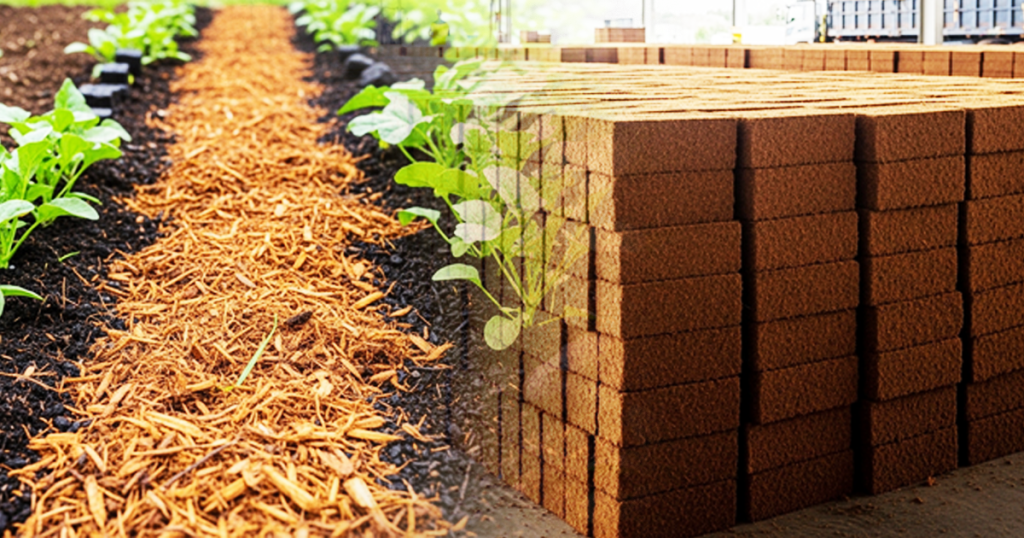
One of the most promising uses of coconut fiber lies in horticulture through cocopeat, the fibrous dust that results from processing coir. As a soil amendment, cocopeat improves water retention, aeration, and nutrient holding capacity critical elements for sustainable crop production.
Unlike peat moss, which is harvested from fragile wetland ecosystems, cocopeat is a byproduct of coconut processing, making it a more sustainable option. In trials conducted in Indonesia and India, tomato and lettuce plants grown in cocopeat substrates demonstrated up to 15% higher yield and faster root development compared to traditional soils.
Industrial and Economic Potential
The global market for coconut fiber is projected to reach USD 900 million by 2027, driven by increasing awareness and governmental support for biodegradable materials. Countries with abundant coconut production such as the Philippines, India, Indonesia, and Sri Lanka are beginning to invest in processing facilities and R&D centers to improve the fiber’s quality and expand its usability.
Recent studies have shown that when treated with natural latex or other organic binders, coconut fiber can rival the insulation and durability of synthetic composites. This opens the door for its use in green building materials, furniture padding, and even soundproofing panels.
Challenges and Future Research
Despite its promise, coconut fiber still faces hurdles. Consistency in fiber quality, limited mechanization in processing, and lack of international standardization are notable barriers. Moreover, integrating coir products into global supply chains requires collaborative efforts between researchers, policymakers, and industries.
At our research facility, we are currently exploring enzyme treatments and hybrid blends with other natural fibers such as jute and hemp to enhance coir’s elasticity and reduce degradation over time. These innovations could make coconut fiber a frontrunner in the bio-based materials market.
Nature’s Waste, Industry’s Asset
Coconut fiber stands at the crossroads of sustainability and innovation. With the right investment in processing technology and global market integration, this humble agricultural byproduct can be transformed into a major player in the fight against plastic pollution and resource depletion.
As a researcher, I remain optimistic. The more we understand and utilize coconut fiber’s capabilities, the closer we move toward a circular economy one where waste becomes wealth and sustainability is woven into every fiber of industry.