Coco Fiber: From Agricultural Waste to Global Biomaterial Innovation
As global industries accelerate their transition toward sustainable materials, a once-overlooked agricultural by-product coco fiber, or coir fiber is gaining significant traction in the international biomaterials market. Derived from the husk of coconuts, this resilient, biodegradable fiber is now poised to disrupt sectors ranging from packaging to construction and automotive manufacturing.
As a researcher dedicated to exploring the full potential of cocopeat and coco fiber, I have witnessed firsthand the evolution of this humble material from waste to a high-value bio-resource. The global shift toward a circular economy has placed coco fiber under a new spotlight, pushing both research and industry to invest heavily in its applications.
A New Contender in Sustainable Innovation
Historically, coco fiber was largely used in traditional handicrafts, ropes, brushes, and mattresses. However, advances in material science have enabled its transformation into composites and structural bio-materials. Its tensile strength, water resistance, and biodegradability make it an ideal alternative to synthetic fibers and even wood-based products.
Multinational companies in Europe and North America are now investing in coco fiber-based solutions. For instance, automotive giants have begun incorporating coir fiber mats and panels into vehicle interiors due to their lightweight, non-toxic, and heat-resistant properties. In the construction industry, coir-reinforced concrete and insulation panels are under active development.
Why Coco Fiber?
Sustainable and Abundant
Coco fiber is not just renewable it’s abundantly available in tropical regions where coconut production thrives, such as Indonesia, India, the Philippines, and Sri Lanka.
Unlike many biomaterials that compete with food crops or require dedicated land, coco fiber is a by-product, making it both economically and environmentally efficient.
High Performance at a Low Cost
Compared to other natural fibers such as jute or hemp, coco fiber offers a favorable balance of mechanical strength and affordability.
It also has natural resistance to saltwater, bacteria, and fungi, making it an excellent material for marine applications and humid environments.
Industrial Demand and Market Trends
The global coir market was valued at USD 422.8 million in 2022 and is projected to reach over USD 800 million by 2030, according to various market intelligence reports. Driving this demand is not just increased awareness, but also legislative pressure. Governments across the globe are enacting stricter environmental regulations, particularly around single-use plastics, packaging waste, and carbon emissions.
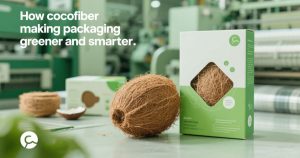
In response, companies are increasingly turning to bio-based materials like coco fiber for eco-friendly solutions. This includes biodegradable pots in horticulture, fiberboards in the furniture industry, and packaging materials that can replace petroleum-based plastics.
Innovation at the Research Frontline
Recent laboratory studies, including my own research, have explored hybrid composites made by combining coir fiber with other natural or recycled materials. One promising direction involves blending coco fiber with natural latex or biopolymers to create flexible, durable sheets suitable for high-performance use. Others are exploring nano-cellulose extraction from coir dust, another by-product of the same supply chain.
Such innovations not only add value but also create a closed-loop system for coconut waste utilization, making the entire coconut industry more sustainable.
Challenges and the Road Ahead
Despite its promise, coco fiber still faces certain challenges. The variability in fiber quality, limited industrial processing infrastructure in producing countries, and lack of standardized specifications remain key hurdles.
Moreover, while the material itself is renewable and biodegradable, the supply chain must also adhere to sustainable practices to qualify as truly green. Issues such as labor practices, energy use in processing, and logistics must be addressed as part of a comprehensive life-cycle analysis.
To fully integrate coco fiber into global material streams, stronger collaboration between researchers, policymakers, and private sector players is essential. Establishing international standards and improving local value chains in producing countries will ensure that coco fiber’s potential can be scaled effectively and ethically.