Cocopeat’s Global Rise A Researcher’s Perspective
As a researcher deeply involved in sustainable agricultural substrates, the rise of cocopeat blocks has become a significant area of focus. Traditionally viewed as a byproduct of the coconut industry, cocopeat also known as coir pith or coir dust is now carving a vital role beyond composting.
The global horticulture and hydroponics industries have sparked a massive demand for this organic, renewable medium, driving production and innovation across tropical coconut-producing regions.
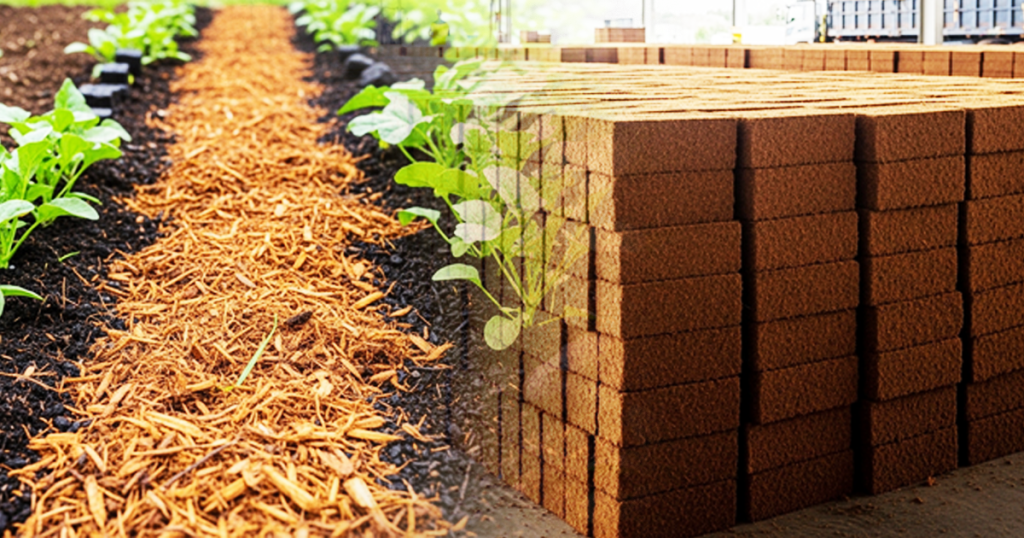
Countries like India, Sri Lanka, Indonesia, and the Philippines are leading suppliers of compressed cocopeat blocks. These lightweight yet dense blocks are favored for export due to their cost-efficiency and ease of storage.
Once rehydrated, they expand to several times their original volume, delivering a versatile growing medium that outperforms peat moss in moisture retention, aeration, and biodegradability.
The demand surge is not just an industrial trend but also a response to pressing ecological concerns. Peat moss harvesting causes long-term damage to natural peat bogs. In contrast, cocopeat is a waste-derived solution that aligns with the principles of circular economy and sustainable farming. This growing global preference suggests a transformative shift in how the world approaches horticultural substrates.
Scientific Advantages That Drive Adoption
Cocopeat’s Physical and Chemical Properties
Cocopeat blocks are more than just sustainable they are scientifically superior in several key aspects. From a technical viewpoint, cocopeat offers an ideal water-to-air ratio. It retains moisture up to eight times its weight while still allowing excellent drainage. This makes it particularly suitable for arid and semi-arid climates where water conservation is essential.
Chemically, properly processed cocopeat maintains a neutral to slightly acidic pH (5.5–6.8), which is optimal for most plant roots. Furthermore, when washed and buffered, it has a low Electrical Conductivity (EC), minimizing the risk of salt buildup in hydroponic systems. Researchers and agronomists have observed consistent yields in crops like tomatoes, lettuce, and strawberries when grown in cocopeat substrates.
It’s not just the yield that improves. Root aeration in cocopeat-based systems leads to stronger, healthier plants. Trials across multiple climates demonstrate better resistance to root diseases and environmental stress. These findings are making growers worldwide reconsider their traditional choices.
Industrial and Agricultural Applications Expand
From Commercial Farms to Urban Gardens
The application of cocopeat blocks has expanded far beyond industrial farms. Urban agriculture initiatives in Europe and North America have adopted cocopeat for vertical gardens, rooftop farms, and indoor planting systems. Its light weight, cleanliness, and ease of transport make it suitable for confined or elevated spaces.
In developing regions, cocopeat blocks are empowering smallholder farmers to enhance productivity with fewer inputs. When combined with organic nutrients, cocopeat provides a cost-effective alternative to expensive synthetic growing mediums. NGOs and agri-tech startups are promoting cocopeat-based kits for household food production, particularly in areas affected by soil degradation or drought.
Additionally, floriculture and nursery businesses are increasingly turning to cocopeat to meet growing demand for eco-certified plants. Exporters now offer customized blends of cocopeat blocks mixed with perlite, vermiculite, or compost to suit specific crop requirements. This customization further enhances its global appeal.
Challenges and Future Directions in Cocopeat Research
Despite its advantages, cocopeat usage is not without challenges. Variability in quality, especially regarding EC and fiber content, poses a concern for growers relying on precision agriculture. Thus, standardization and certification are becoming critical research themes.
Post-harvest processing methods washing, drying, buffering, and compressing greatly influence the final product’s quality. My current research focuses on developing real-time testing kits to help producers monitor EC and pH levels before shipping. Additionally, innovations in packaging and block compression are being explored to reduce carbon footprints in transport.
Future research also points toward biofortification enhancing cocopeat with beneficial microbes or slow-release fertilizers. This would allow the blocks to serve not just as a growing medium but also as a nutrient delivery system. If successful, this innovation could further boost the adoption of cocopeat in regions with limited access to agricultural inputs.